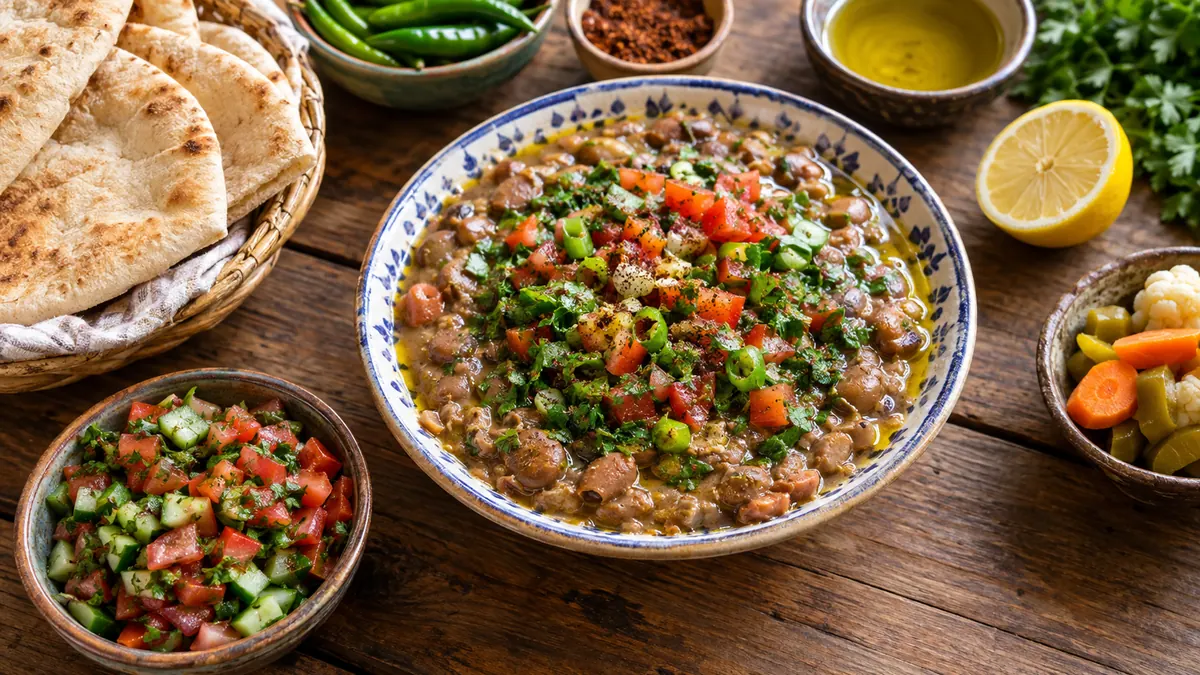
Why Do Egyptians Start the Day With Ful? The Story and the Recipe
Ful medames is a warm bowl of slow-cooked fava beans, mashed lightly and dressed with olive oil, lemon, cumin and garlic. It is the classic Egyptian breakfast, and it is eaten in many other countries in the region. It is plant-based, filling, cheap and naturally halal. This recipe shows how to make it from dried beans or from canned beans.
The story of ful
The name ful medames is often translated as “buried beans”, a reference to the traditional slow cooking method in which beans were cooked in a pot that was partly buried in hot coals, or kept warm overnight. Food writers note that fava beans were not clearly a part of the diet of the ancient Egyptians. They seem to have become popular around Greek and Roman times, and by the Middle Ages ful was an established part of Egyptian street food.
Today, ful is called a national dish by many Egyptians. It is eaten at breakfast, as a snack, and during Ramadan at suhoor and iftar. In Cairo, small carts and shops serve it from large copper pots in the morning. It often comes with ta’ameya, boiled eggs, bread, pickles and a glass of sweet tea.
Ingredients (serves 4)
- 1 1/2 cups (300 g) dried fava beans (foul), or 2 cans (about 800 g) cooked fava beans
- 1/2 cup (100 g) red lentils (optional, helps creamy texture)
- 3 tbsp olive oil, plus extra for serving
- 3 cloves garlic, crushed
- 1 tsp ground cumin
- Juice of 1 lemon
- 1 tsp salt
- 1 tomato, diced
- 1 small onion or spring onions, chopped
- 1/4 cup chopped parsley
- Chili flakes or hot sauce, to taste
- Warm flatbread, to serve
Method with dried beans
- Soak the beans in plenty of cold water overnight. Drain.
- Place them in a pot with fresh water, covering by 5 cm. Add the red lentils if using. Bring to a boil, then simmer on low heat for 2 to 3 hours until the beans are very soft. Add water if needed.
- Season with salt near the end. Drain most of the liquid, keeping a cup.
- Mash some of the beans with a fork or potato masher, leaving some whole. Add some of the cooking liquid to loosen.
Method with canned beans
Warm the beans in a pan with a splash of water for 10 minutes. Mash lightly.
Finishing
Stir in the garlic, cumin, lemon juice and olive oil. Taste and add salt or more lemon. Spoon into bowls. Top with tomato, onion, parsley and extra olive oil. Add chili flakes if you like heat. Serve hot with bread.
Tips
Add the lemon and garlic at the end, so their flavor stays bright. If the ful is too thick, add warm cooking liquid. If it is too thin, simmer it for a few more minutes. A spoon of tahini stirred in gives a creamy, Alexandrian style. Do not skip the olive oil, since it is a key part of the flavor.
Variations
Alexandria style adds tahini, chili and tomato. Cairo style often adds a little butter or ghee, and sometimes a spoon of tomato sauce. Some cooks top the bowl with a boiled egg or fried egg. A sprinkle of pickled lemon or chopped green chili adds extra bite.
Halal notes
Ful is plant-based. Use olive oil or vegetable oil. If you serve it with eggs, bread and pickles, check the ingredients for additives you avoid.
Storage
Keep leftovers in the fridge for up to four days. Reheat with a splash of water. You can freeze it for up to two months.
Frequently asked questions
Can I use canned beans? Yes. They are a good shortcut. Choose plain canned fava beans, not ones with added sauces.
Why do I get gas from beans? Soaking and cooking well, and draining the soaking water, helps. Adding a pinch of cumin also helps many people.
Is ful healthy? It is high in protein and fiber, and it is a common, affordable source of nutrition in Egypt.
What is the difference between ful and ta’ameya? Ful is cooked, mashed beans. Ta’ameya is a fried fritter made from ground fava beans and herbs. They are often served together.
Sources
The background on ful’s history comes from the Oxford Companion to Food entry on ful mudammes (https://app.ckbk.com/reference/food77337c06s001e156/ful-mudammes), Google Arts & Culture’s RAWI Egypt’s Heritage Review (https://artsandculture.google.com/story/what-39-s-for-breakfast-in-egypt-rawi-egypts-heritage-review/mwWROoQYaoftPw?hl=en) and NPR (https://www.npr.org/2026/08/31/nx-s1-5945114-e1/egypts-beloved-breakfast-is-a-fava-bean-duo-with-ancient-roots).
An Egyptian breakfast table
Ful is rarely eaten alone. A full Egyptian breakfast puts several dishes in the middle of the table: a bowl of ful, a plate of ta’ameya, hard-boiled eggs, sliced tomato and cucumber, fresh or pickled vegetables, white cheese, and a stack of warm baladi bread. Everyone tears bread and scoops from the shared dishes. Tea with plenty of sugar finishes the meal. If you serve ful at home, set it up this way and the meal feels special even on an ordinary morning.
Ful during Ramadan
During Ramadan, ful is popular at suhoor, the meal before dawn, because it is filling and gives lasting energy. Many families cook a large pot in the afternoon and reheat it at night. Adding a spoon of olive oil on top and eating it with bread and a boiled egg makes a simple suhoor that keeps hunger away for hours. Some people drink plenty of water with it, and add a squeeze of lemon, which helps digestion.
Getting the texture right
The ideal ful is creamy but not a paste. Some beans should stay whole so you get both textures in each spoonful. Mash with the back of a fork and stop when about half the beans are broken. If you like it smoother, add a spoonful of the cooking liquid and mash more. If you like it chunky, mash less. Taste the beans before adding lemon, as canned beans are often already salted, and you can always add more salt later.
Quick weeknight version
When you are short of time, warm two cans of fava beans with a clove of crushed garlic, a pinch of cumin, a spoon of olive oil and a squeeze of lemon. In ten minutes you have a hot breakfast or dinner. Serve with bread, tomato and a boiled egg. It will not match the slow-cooked flavor, but it is a satisfying shortcut.