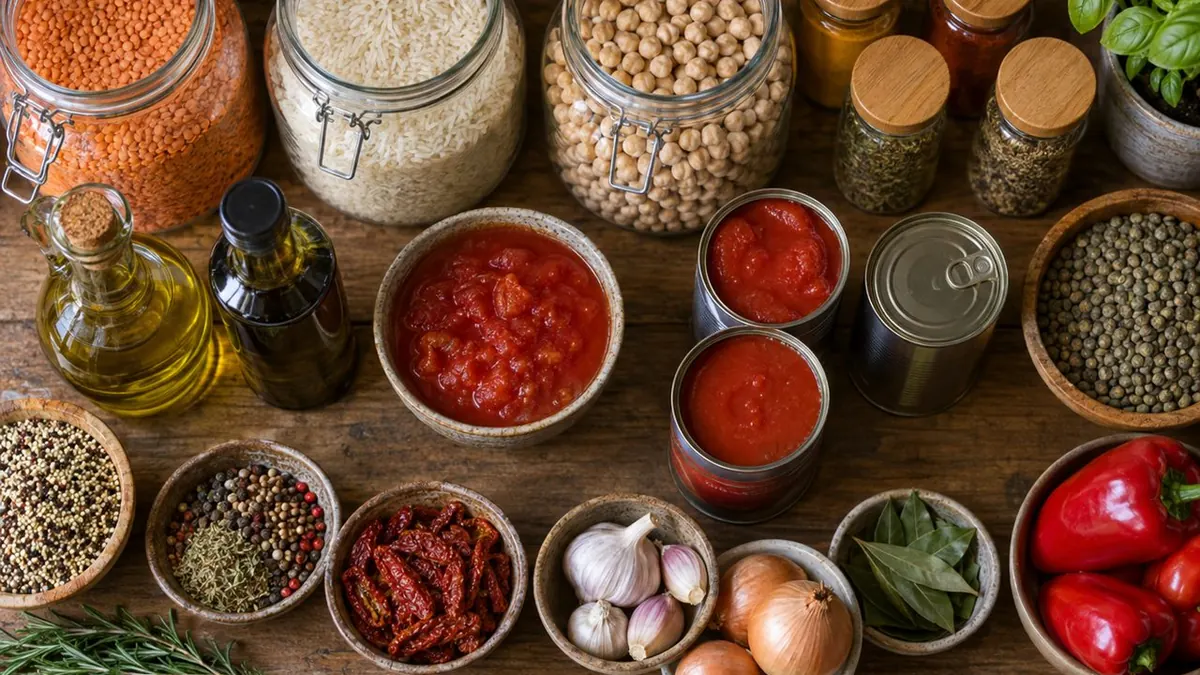
What Should Be in a Halal Pantry? 40 Staples for Quick Cooking
Why now: Rising Trends shows budget friendly and easy cooking among the strongest growing themes in November 2026, and a stocked pantry is what makes quick meals possible.
A good pantry means you can make dinner without a shopping trip. It also saves money, since you buy staples in bulk and cook from scratch. This list is built for a halal home. It names what to stock, how long it lasts, what to check on the label and five meals you can make with only the pantry plus a few fresh items.
Grains and starches
Rice (basmati and a short grain), pasta, couscous, bulgur, rolled oats, flour, cornmeal, flatbread or wraps for the freezer, and potatoes and onions in a cool dark spot. Whole grains keep for months in airtight containers. Flour is best used within a year.
Legumes
Red and brown lentils, chickpeas, white beans, kidney beans and black beans. Keep both dried and canned. Dried beans last for years, while canned ones last two years or more. Lentils need no soaking and cook in about 20 minutes.
Canned and jarred
Canned tomatoes, tomato paste, coconut milk, tuna, sardines, corn, olives, pickles, roasted red peppers and tahini. Check the labels on canned fish for oil type and any flavorings. Tomato paste in a tube keeps well in the fridge after opening.
Oils, vinegars and sweeteners
Olive oil, a neutral oil, vinegar, lemon juice, honey, sugar and dates. Pomegranate molasses is worth buying for dressings and stews. Check the label on any vinegar or sauce when you are unsure.
Spices and flavorings
Salt, black pepper, cumin, coriander, paprika, turmeric, cinnamon, chili flakes, oregano, cardamom and sumac. Garlic and ginger, fresh or frozen. Dried herbs such as mint and thyme. Stock cubes that are certified halal, or your own frozen stock.
Baking basics
Baking powder, baking soda, yeast, cornstarch, cocoa, alcohol free vanilla, nuts, seeds and dried fruit. Store nuts and seeds in the freezer to keep them fresh.
Dairy and eggs
Eggs, milk, plain yogurt, butter and a hard cheese in the fridge. Choose cheeses made with microbial rennet. UHT or powdered milk is a handy backup.
Freezer staples
Halal chicken pieces and ground meat in portions, frozen vegetables, peas, spinach, berries, bread and cooked rice. Freeze meat in flat bags that thaw quickly. Label everything with the date.
Five meals from the pantry
1. Lentil soup: Onion, lentils, tomato paste, cumin and stock, 30 minutes.
2. Chickpea curry: Canned chickpeas, canned tomatoes, coconut milk, onion, garlic and curry spices, 25 minutes.
3. Pasta with tuna and tomato: Pasta, canned tuna, tomatoes, garlic, olives and chili, 20 minutes.
4. Egg fried rice: Leftover rice, eggs, frozen peas and soy sauce, 10 minutes.
5. Bean and vegetable stew: White beans, potatoes, carrots, tomato paste and herbs, 35 minutes.
How to keep a pantry fresh
Use the first in, first out rule: put new items behind the old. Keep dry goods in sealed containers to deter pests. Check dates every few months. Write a running shopping list on the fridge or your phone and restock when you reach the last one.
Reading labels
Look for halal certification marks, and read ingredient lists for gelatin, lard, alcohol based flavorings and unspecified animal fats. Be careful with ready sauces, soup mixes and snack foods. When you can, buy simple ingredients and cook them yourself.
Saving money
Buy dried beans, lentils and rice in bulk from ethnic grocery shops, where prices are often lower. Choose store brands for basics. Plan meals around what is on sale. Do not stock up on items you rarely use.
Common mistakes
Buying too many specialty ingredients that go unused. Not rotating stock. Storing spices above the stove. Forgetting that nuts go rancid.
Frequently asked questions
What should a beginner buy first? Rice, lentils, canned tomatoes, onions, olive oil, salt and three spices.
How do I store flour? In a sealed container in a cool place.
How long do spices last? Ground spices about a year, whole spices a few years.
A starter shopping list for a new kitchen
Week one: rice, lentils, pasta, canned tomatoes, chickpeas, olive oil, salt, pepper, cumin, paprika, onions, garlic, eggs and yogurt. Week two: add coconut milk, tahini, tuna, oats, honey, flour, baking powder and cinnamon. Week three: add frozen vegetables, halal chicken for the freezer, nuts, dates and herbs. Spreading purchases over three weeks keeps the cost manageable.
Making a weekly plan from the pantry
Pick three pantry meals, one meal using fresh meat from the freezer and one flexible meal for leftovers. Buy only fresh produce and dairy each week. This approach reduces waste and makes the weekly shop smaller and cheaper.
Cleaning out the pantry
Every three months, take everything out, wipe the shelves, check dates and group items by type. Donate unopened items you will not use. Note what you are low on. A tidy pantry also shows you what you already have, which prevents duplicate buying.
The takeaway
A stocked pantry is the quiet foundation of everyday cooking. Build it slowly, check the labels and rotate your stock.