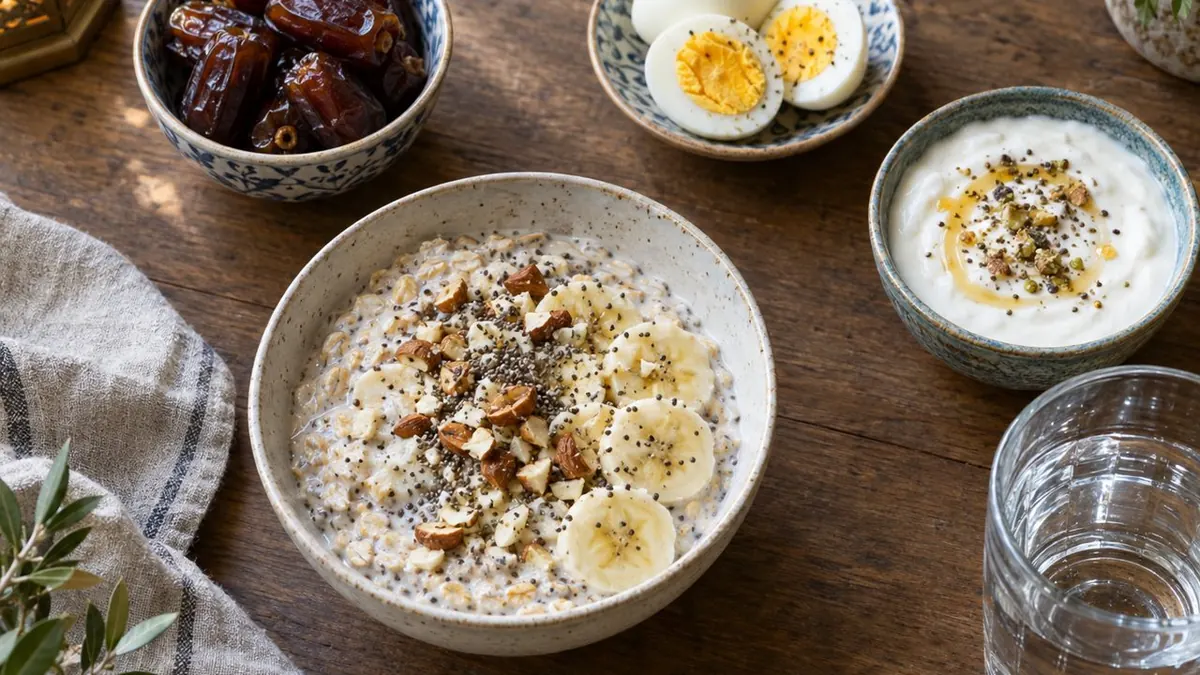
What Should You Eat at Suhoor? Filling Pre-Dawn Meals That Last All Day
Why now: Rising Trends shows high protein and filling meal ideas among the strongest growing cooking searches in November 2026, and suhoor planning is a common reason people look for them ahead of fasting days and Ramadan.
Suhoor is the pre dawn meal eaten before a fast. A good suhoor is easy to digest, holds steady energy and helps with thirst through the day. Many people skip it or eat sugary food that wears off quickly. This guide explains what to look for, gives a set of quick recipes and shows how to prepare them ahead so that waking up early is as easy as possible.
What makes a good suhoor
Look for slow release carbohydrates such as oats, whole grain bread, brown rice or beans. Add protein from eggs, yogurt, cheese, lentils or chicken. Add healthy fats such as olive oil, nuts or avocado. Include fruit or vegetables and drink water or milk. Go easy on salt and very spicy food, which may make you thirsty. Heavy fried food can leave you sluggish. General information, not medical advice. People with health conditions should follow their doctor’s advice about fasting.
Recipe 1: Overnight oats
Mix 1/2 cup oats, 1/2 cup milk, 1/4 cup yogurt, 1 tablespoon chia seeds and a teaspoon of honey in a jar. Refrigerate overnight. In the morning, top with sliced banana and chopped walnuts. It takes three minutes to make the night before and requires no cooking at all.
Recipe 2: Ful medames wrap
Warm a can of fava beans with garlic, cumin, lemon juice and olive oil. Mash lightly. Spoon into a whole wheat wrap with sliced tomato and cucumber. Fava beans are filling and widely used for breakfast in many countries.
Recipe 3: Veggie omelet
Beat 3 eggs with salt and pepper. Cook in a pan with chopped spinach, tomato and onion. Serve with a slice of whole grain toast and some avocado. It takes about 8 minutes.
Recipe 4: Date and nut energy bites
Blend 1 cup of pitted dates, 1/2 cup of almonds, 1/2 cup of oats and a pinch of cinnamon. Roll into balls and chill. Make a batch for the week. Two or three bites with a glass of milk is a good quick option.
Recipe 5: Lentil soup with bread
Simmer red lentils with onion, carrot, garlic and cumin in water or stock until soft. Blend until smooth. Serve with lemon and a piece of bread. Make it in a big pot and reheat each morning.
Recipe 6: Labneh plate
Spread labneh on a plate, drizzle with olive oil and sprinkle with za’atar. Serve with cucumbers, olives, tomatoes and pita. No cooking is required.
Prepare ahead
Cook a pot of lentil soup and portion it. Boil eggs for the week. Make energy bites. Mix overnight oats for two days at a time. Set out plates and tools the night before. Plan your suhoor menu on the weekend and shop accordingly.
Drinks
Water is the most important. Drink steadily between iftar and suhoor, not all at once. Milk, laban or a smoothie also add fluid. Limit strong tea and coffee, since caffeine can increase fluid loss in some people.
Foods to limit
Very salty foods such as heavily salted cheeses and pickles, sugary pastries and fried snacks. These may leave you thirsty or hungry sooner.
Frequently asked questions
Is it okay to eat a big meal? A moderate meal is usually better than a very heavy one.
What if I am not hungry? Try a light option like yogurt with fruit or a smoothie, and some dates.
Can children eat these? Many suit older children, but fasting rules differ, so follow your family’s guidance.
How soon should I eat? Eat before the dawn time in your area and finish with time to spare.
A weekly suhoor planner
Day 1: Overnight oats with banana. Day 2: Veggie omelet with toast. Day 3: Lentil soup with bread. Day 4: Labneh plate with olives and cucumber. Day 5: Ful wrap with tomato. Day 6: Yogurt with dates and nuts. Day 7: Scrambled eggs with avocado. Rotating helps you avoid boredom through a long month.
Hydration across the night
Start with a glass of water at iftar and keep sipping until bed. Eat water rich foods like cucumber, watermelon, oranges and soups. Add a pinch of salt only moderately. Try to drink a glass or two with suhoor. Avoid drinking a large amount at once, since the body cannot use it that way.
For those who find it hard to wake
Set out everything the night before. Choose meals needing no cooking, such as overnight oats or labneh plates. Keep the lights low and eat slowly. Go to bed early if you can. Make a simple routine and it becomes easy within a few days.
Dates
Dates are a traditional food and are rich in natural sugar and fiber. Eating one or two with the meal is common. Pair them with nuts or milk for slower energy.
The takeaway
A good suhoor is simple: slow carbohydrates, protein, fat and water. Prepare ahead and you will wake up to a meal that is ready in minutes.