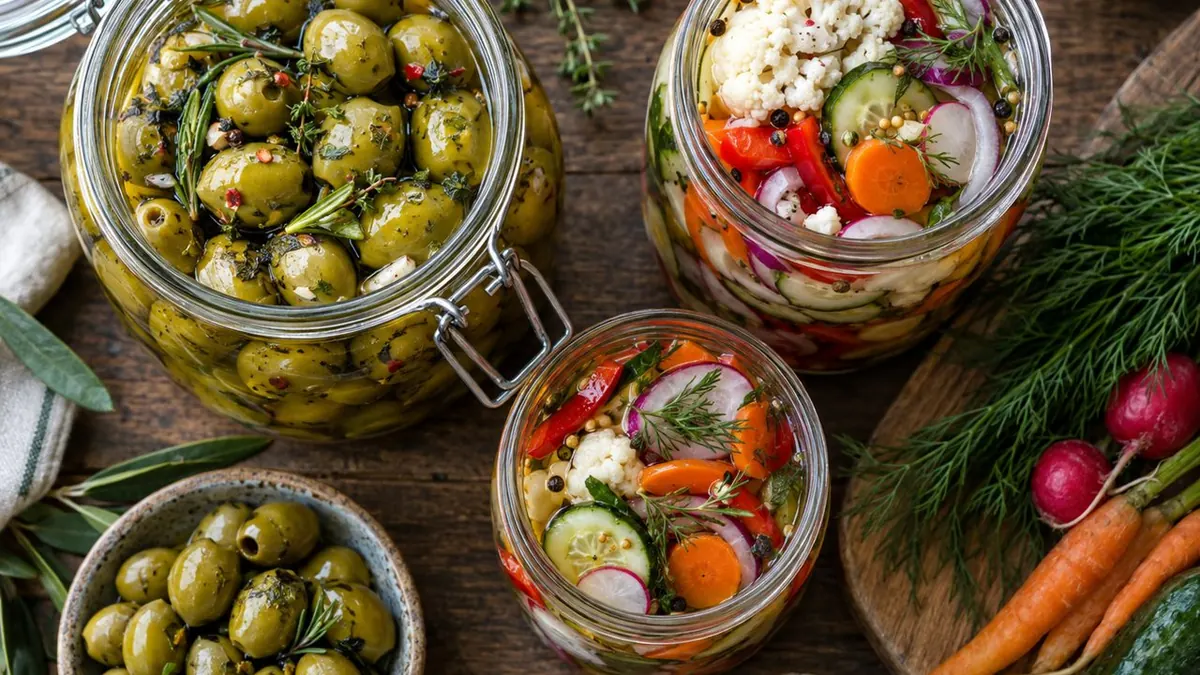
Home Cured Olives and Quick Pickles: Easy Brines That Beginners Can Do
Why now: “Fermented olives” is a new entry on the Rising Trends cooking list in November 2026, with roughly 1,300 searches and fast year over year growth. Rising Trends treats entries of this size as early signals.
Olives picked from a tree are bitter and inedible until they are cured. Curing removes the bitter compound and develops flavor. Home curing sounds hard but is mostly waiting. This guide covers a simple brine cure for green olives and a set of quick vegetable pickles for the days when you do not want to wait. Neither uses alcohol, and both suit a halal kitchen.
Why cure olives at home
Home cured olives taste fresher than many jars from the shop. You choose the salt level, the herbs and the heat. If you have access to fresh olives in season, curing them is a good way to preserve a harvest. Note that fresh olives are only available at certain times of the year, depending on where you live.
Basic brine cure for green olives
Time: 4 to 6 weeks. Ingredients per 1 kg of olives:
- 1 kg fresh green olives
- Water to cover
- About 100 g of salt per litre of brine
- Optional: lemon slices, garlic, bay leaves, chili, oregano
Method:
- Rinse the olives and discard bruised ones. Make a small cut in each with a knife, or crack them lightly with a mallet. This helps the bitterness leach out.
- Place them in a large clean jar or food grade container and cover with plain cold water. Keep them under the surface with a weight or a small plate. Change the water every day for 7 to 10 days.
- Taste an olive. If it is still very bitter, continue changing the water for longer.
- Make the brine by dissolving salt in water. Pour it over the olives and add lemon, garlic, bay and herbs.
- Cover loosely and leave at a cool room temperature for 3 to 4 weeks, tasting along the way.
- When they taste right, move the jar to the fridge. A thin layer of olive oil on top helps to protect the surface.
Safety notes
Use clean jars and clean hands. Keep olives fully under the brine. Discard if you see fuzzy mold or smell something spoiled. Home curing of low acid foods requires care, so follow a trusted tested recipe and do not experiment with lower salt levels. If in doubt, throw it out.
Quick pickled vegetables
Quick pickles use vinegar and are ready in a day.
Pickled red onions: Slice 2 red onions thinly. Mix 1 cup of vinegar, 1 cup of water, 1 tablespoon of sugar and 2 teaspoons of salt. Pour over the onions and rest for 30 minutes. Good on tacos, salads and sandwiches.
Pickled cucumbers: Slice 4 small cucumbers. Add garlic, dill and peppercorns to a jar. Pour over the same brine and chill for 24 hours.
Pickled turnips: Cut turnips into sticks with a slice of beetroot for a pink color. Cover with brine of water, vinegar and salt and leave for 5 days. These are common alongside shawarma and falafel.
Pickled chilies: Slice chilies, pour over warm vinegar brine and keep in the fridge.
How to use them
Add olives to salads, pizza, tagines and pasta. Serve pickles with sandwiches, rice dishes and grilled meats. Chop them into a salsa or relish. Use a spoon of brine in dressings.
Common mistakes
Not keeping the vegetables submerged causes spoilage. Using iodized salt can cloud the brine, so use pickling or sea salt. Skipping the water changes leaves olives bitter. Using a metal lid with a corrosive brine can rust, so use glass or plastic lids when possible.
Frequently asked questions
Can I use store bought olives? Those are already cured. You can marinate them in olive oil, lemon, garlic and herbs for a quick upgrade.
How long do quick pickles last? About two to three weeks in the fridge.
Is vinegar halal? Plain vinegar such as white, apple cider or rice vinegar is accepted by many scholars. Check with your own guidance if you are unsure.
Flavor variations for cured olives
Lemon and garlic: Add lemon slices, 6 cloves of garlic and a few sprigs of thyme to the final brine. Spicy: Add dried chili flakes and a few whole peppercorns. Herb and orange: Add strips of orange peel, fennel seed and bay leaves. Marinated: After curing, drain the olives and toss with olive oil, lemon zest, garlic and oregano for a week in the fridge.
Serving ideas
Serve a small bowl of olives with warm bread and cheese. Chop them into a quick tapenade with capers, garlic, lemon and olive oil. Stir olives into chicken tagine, add them to pasta sauce or scatter over pizza. Pickles go well with falafel wraps, burgers and rice and lentil dishes.
Storing homemade pickles
Keep them in the fridge in clean jars with a tight lid. Use a clean fork each time. Quick pickles are best within two or three weeks. If the brine turns cloudy with a slimy texture or smells off, discard the batch.
The takeaway
Curing olives takes patience, but quick pickles take minutes. Start with pickled onions, and try olives when they are in season.