Is Your Gut Happy? A Practical Halal Meal Guide for Better Digestion
Why now: “Gut health” is a rising food topic of 2026 on Rising Trends, at about 49,500 searches and roughly 41% year over year growth.
Gut health has become one of the biggest themes in food. The idea is simple: the trillions of microbes in your digestive system respond to what you eat, and a varied diet rich in fiber and fermented foods tends to support them. The science is still developing, and online claims can run ahead of the evidence, so this guide sticks to practical, food based habits that most dietitians agree are sensible. It is general information and not medical advice. If you have digestive symptoms or a health condition, speak to a doctor or registered dietitian.
The basics
Eat a variety of plants. Different fibers feed different microbes. Aim for many types of vegetables, fruits, beans, grains, nuts and seeds across the week, not just a large amount of one kind.
Get enough fiber. Many adults eat less fiber than recommended. Beans, lentils, oats, whole grains, fruit and vegetables are the best sources. Increase slowly and drink water to avoid bloating.
Include fermented foods. Yogurt, kefir, labneh, sauerkraut, pickled vegetables and miso contain live cultures. Check labels for “live and active cultures”.
Limit heavily processed foods. Foods high in added sugar, refined flour and certain additives are less helpful.
Halal friendly choices
Plain yogurt, labneh and kefir are halal as long as the product has no gelatin or non halal additives. Check for gelatin in flavored yogurts. Choose miso and soy sauce carefully, as some contain alcohol, so read labels. Pickles made with vinegar or salt brine are suitable. Use halal meat and fish.
A day of gut friendly eating
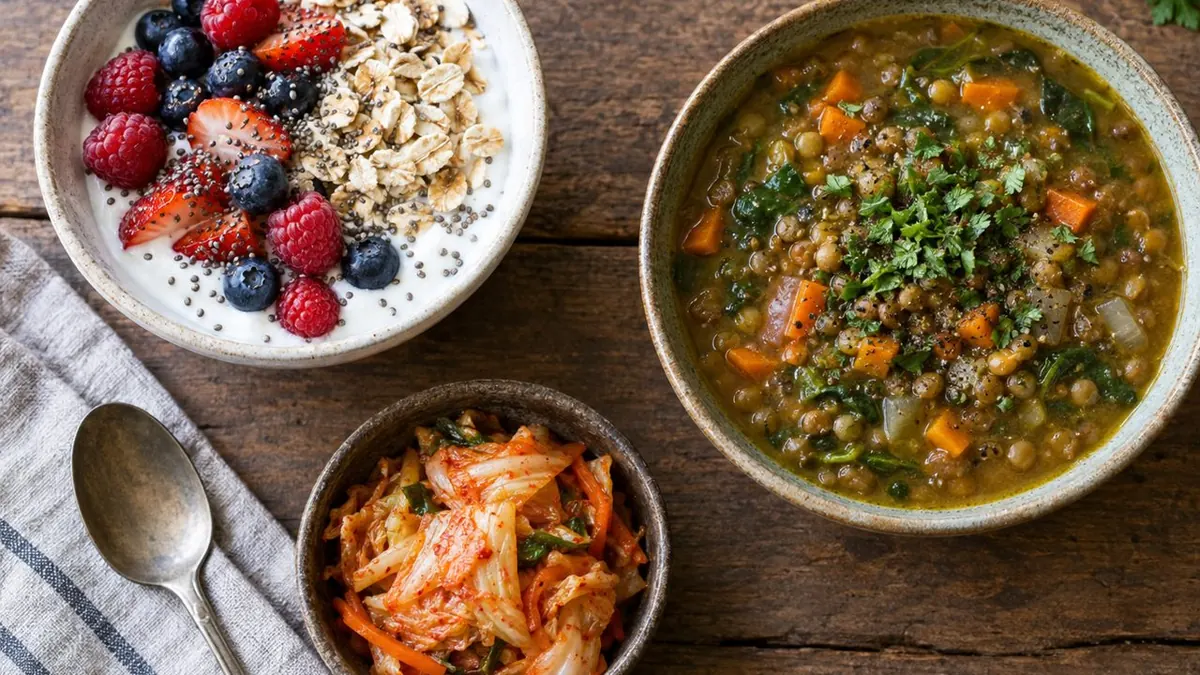
Breakfast: Overnight oats with plain yogurt, chia seeds, berries and a spoon of nuts.
Lunch: Lentil and vegetable soup with a side of whole wheat bread and a salad topped with pickled vegetables.
Snack: An apple with peanut butter, or hummus with carrot sticks.
Dinner: Grilled halal chicken with brown rice, roasted vegetables and a bowl of cucumber and yogurt salad.
Easy recipes
Labneh with herbs. Stir 1 cup plain yogurt with 1/2 teaspoon salt and drain in a cloth lined sieve in the fridge for 12 to 24 hours. Spread on a plate, top with olive oil, za’atar and herbs.
Three bean salad. Mix canned chickpeas, kidney beans and white beans with chopped cucumber, tomato, red onion, parsley, olive oil, lemon and cumin.
Mango yogurt smoothie. Blend 1 cup plain yogurt, 1 cup mango, 1/2 cup milk, a spoon of oats and a few ice cubes.
Fasting and Ramadan
During Ramadan, aim to include dates, soup and a salad at iftar, then a main with whole grains and vegetables. For suhoor, oats with yogurt, or eggs with beans and whole wheat bread give slow release energy. Drink plenty of water between iftar and suhoor. Sudden big changes in fiber can cause discomfort, so add them gradually before the month starts.
Common mistakes
Adding too much fiber too fast. Build up over a couple of weeks.
Relying on supplements. Whole foods give fiber and nutrients together, and probiotic supplements vary in quality.
Ignoring hydration. Fiber needs water to work well.
Following extreme plans. Cutting out entire food groups without a reason can reduce variety.
A simple shopping list
Oats, brown rice, bulgur, lentils, chickpeas, beans, frozen mixed vegetables, apples, bananas, berries, nuts, seeds, plain yogurt, labneh, olive oil, garlic, onions, leafy greens, a jar of sauerkraut or pickles, and herbs.
A three day sample menu
Day 1: Yogurt with oats and banana. Lentil soup with a salad. Baked chicken with roasted carrots and brown rice.
Day 2: Scrambled eggs with spinach and wholegrain toast. Chickpea and vegetable stew. Grilled fish with sautéed greens and potatoes.
Day 3: Chia pudding with berries. Tabbouleh style grain salad with beans. Halal beef and vegetable stir fry with brown rice.
Easy ways to add more fiber
Swap white rice for brown or mixed grains. Add beans to soups. Keep skins on potatoes and fruit. Increase fiber slowly and drink plenty of water, since a sudden jump can cause bloating. People with digestive conditions should follow their doctor’s advice. General information, not medical advice.
Common mistakes
Changing everything at once is hard to keep up. Pick one or two changes a week. Relying on supplements instead of food is another common mistake, and fermented foods that are heavy in salt should be eaten in moderation.
The takeaway
A gut friendly diet is not about a special product. It is about variety, fiber, fermented foods and regular, mostly home cooked meals. Start with one change this week, such as adding a bean dish or a bowl of yogurt, and build from there. This article is general food information and not medical advice.
Frequently asked questions
Are probiotic drinks necessary? Not necessarily. Plain yogurt, kefir and fermented vegetables provide live cultures at a lower cost. Check labels on commercial drinks for added sugar.
Why do beans make me gassy? Beans contain fibers that gut bacteria ferment, producing gas. Soaking dried beans, rinsing canned ones and increasing the amount slowly can help.
Is lactose a problem? Some people tolerate yogurt and kefir better than milk because the bacteria break down part of the lactose. Lactose free options exist.
When should I see a doctor? If you have ongoing pain, blood in the stool, weight loss without trying or sudden changes in bowel habits, speak to a doctor promptly.