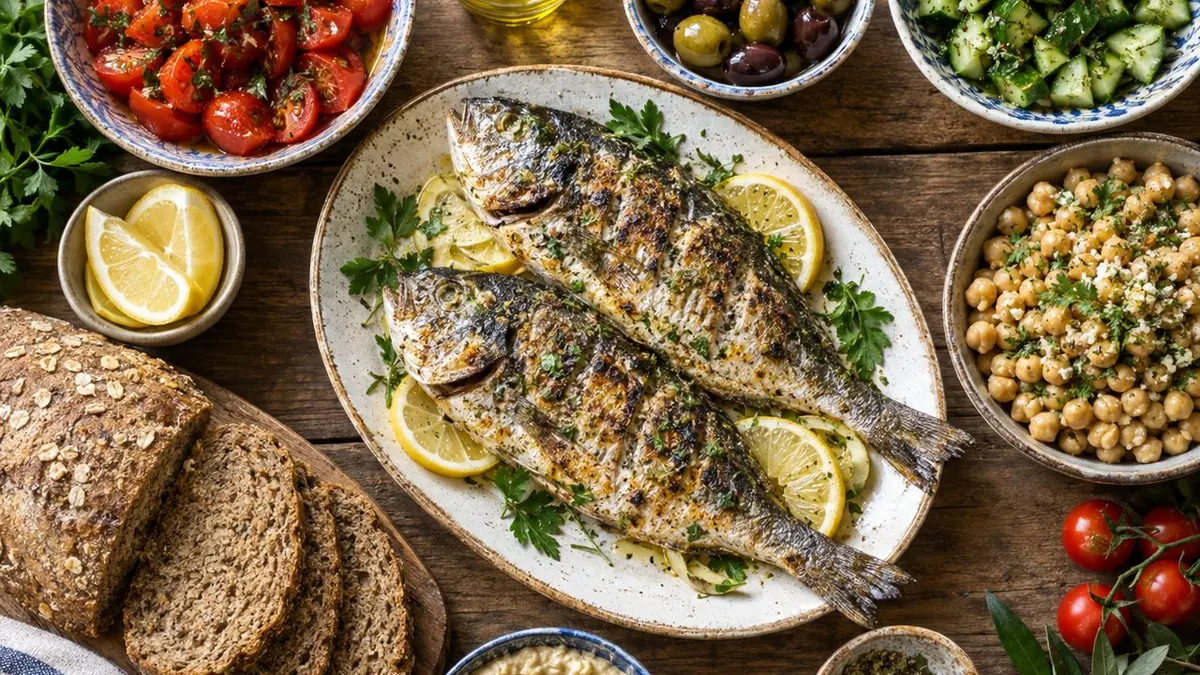
Can You Eat Mediterranean and Halal? A One-Week Meal Plan That Works
Why now: “Mediterranean diet” is the number one cooking and recipe trend of 2026 on Rising Trends, with about 673,000 searches and roughly 42% year over year growth.
The Mediterranean diet is less a strict diet and more a way of eating built around vegetables, legumes, whole grains, olive oil, fish and modest amounts of meat and dairy. It also fits very naturally into a halal kitchen, because the traditional foods of the Eastern and Southern Mediterranean, from Lebanon and Turkey to Egypt and Morocco, are already part of Muslim home cooking. The one adjustment is to leave out wine and any alcohol based cooking ingredients, and to use halal meat. This guide explains the basics and gives a simple week of meals.
What the diet is built on
Health bodies describe the pattern in similar terms. Most of the plate is plants: vegetables, fruit, beans, lentils, chickpeas, nuts and whole grains. Olive oil is the main fat. Fish and seafood appear a couple of times a week. Poultry, eggs and dairy such as yogurt and cheese are eaten in moderate amounts. Red meat is occasional, and sweets are kept for special times. Meals are often shared, which is part of the lifestyle and not only the food.
Making it halal
Almost everything works as is. A few points need attention:
- Use halal chicken, lamb and beef. Many traditional Mediterranean dishes use lamb, which is easy to source halal.
- Skip wine in sauces and marinades. Use lemon juice, pomegranate molasses, vinegar or stock instead.
- Check cheeses for animal rennet if that matters in your home. Many cheeses use microbial rennet.
- Watch hidden ingredients in processed foods, such as gelatin and alcohol based flavorings.
Foods to keep in the pantry
Extra virgin olive oil, canned chickpeas and white beans, lentils, bulgur, whole wheat pita, canned tomatoes, tahini, lemons, garlic, onions, dried oregano and za’atar, olives, nuts, canned tuna or sardines in olive oil, plain yogurt and a few fresh herbs such as parsley and mint. With these on hand, a good meal is never far away.
A one week halal Mediterranean meal plan
Monday: Lentil soup with lemon and cumin, a cucumber and tomato salad, and whole wheat bread.
Tuesday: Grilled halal chicken with garlic and lemon, bulgur pilaf, and roasted peppers.
Wednesday: Chickpea and spinach stew with tomato, served with brown rice.
Thursday: Baked fish with tomatoes, olives and herbs, with a green salad.
Friday: A mezze dinner: hummus, baba ganoush, tabbouleh, falafel baked in the oven, and pita.
Saturday: Slow cooked halal lamb and white bean stew with a side salad.
Sunday: Shakshuka with plenty of bread for a late breakfast, and fruit with yogurt and honey in the evening.
A simple base recipe: chickpea and tomato stew
Serves 4. Time: 30 minutes.
- 3 tablespoons olive oil
- 1 onion, chopped, and 3 cloves garlic
- 1 teaspoon cumin and 1 teaspoon paprika
- 1 can (400 g) chickpeas, drained
- 1 can (400 g) chopped tomatoes
- 2 handfuls of fresh spinach
- Salt, pepper and lemon juice
Cook the onion in the oil until soft. Add garlic and spices for a minute. Add tomatoes and chickpeas and simmer for 15 minutes. Stir in spinach until wilted. Season with salt, pepper and lemon. Serve with rice or bread.
Tips for sticking with it
Start with swaps, not rules. Replace butter with olive oil, white bread with whole wheat, and one meat meal a week with a bean meal.
Cook in batches. Soups, stews and grain salads keep well for several days.
Eat slowly and together. The social side is part of why the pattern works for many people.
Keep snacks simple. Nuts, fruit, yogurt and raw vegetables with hummus are good choices.
Do not aim for perfect. The pattern is flexible, and small steady changes are better than short strict phases.
Common questions
Is it expensive? Beans, lentils, grains and seasonal vegetables are cheap. Fish and good olive oil cost more, so buy them in sensible amounts.
Is it suitable for Ramadan? Yes. Dates, soup, a salad and a balanced main at iftar follow the same ideas, and slow release foods such as lentils and whole grains help at suhoor.
Does it help with weight? It is not a weight loss plan by itself. Portion size, activity and overall habits matter. Speak to a doctor or dietitian for medical needs.
The takeaway
The Mediterranean diet is popular for good reasons: it is tasty, flexible and rooted in food that many Muslim families already cook. Begin with one or two meals this week and build from there. This article is general food information and not medical advice.
Frequently asked questions
Can I follow it on a tight budget? Yes. Build meals around dried beans, lentils, canned tomatoes, frozen vegetables, eggs, rice and bulgur. Buy olive oil in larger tins and use it for most cooking. Canned sardines and tuna are cheap sources of protein.
What about bread and pasta? Both appear in traditional Mediterranean eating. Choose whole grain versions most of the time and keep portions sensible, with plenty of vegetables on the plate.
How do I handle eating out? Look for grilled fish or chicken, salads, vegetable mezze, lentil soups and dishes with olive oil. Ask for sauces on the side.
Can children eat this way? Yes. Hummus, yogurt, fruit, whole wheat pita and simple bean dishes are easy for children, and shared family meals help them try new foods.