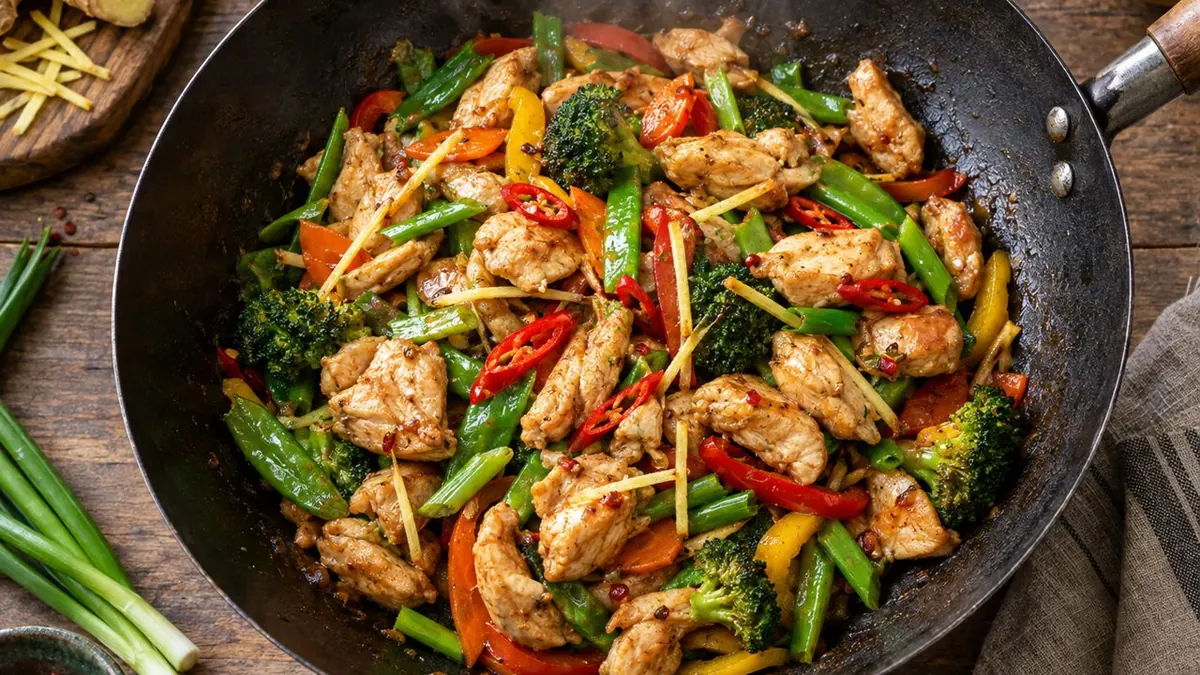
Why Does Restaurant Stir Fry Taste Better? The Techniques Behind It
Why now: “Stir frying” is one of the fastest growing cooking searches of 2026 on Rising Trends, at about 110,000 searches a month and a sharp rise year over year.
Stir frying is one of the fastest ways to get dinner on the table. Done well, it gives tender meat, bright crisp vegetables and a glossy sauce in under fifteen minutes. Done badly, it gives soggy vegetables and gray meat in a pool of liquid. The difference is not a secret recipe. It is a handful of techniques: high heat, small batches, good preparation and the right order of cooking. This guide explains each one and ends with a flexible halal stir fry recipe you can use all week.
Why stir frying works
The method comes from Chinese cooking and is now used across Asia and the world. Food is cut small and cooked quickly in a little oil over very high heat, while being kept in motion. Fast cooking keeps vegetables crunchy and colorful, and the high heat gives a slight smoky flavor often called wok hei, the breath of the wok. You can get a good version at home even without a restaurant burner.
The equipment
A carbon steel wok is ideal, since it heats quickly and responds fast to changes in heat. A large, heavy skillet or a cast iron pan also works, and often works better on a flat electric stove. The key is a pan that holds heat. A thin, light non stick pan is the hardest to use for this method. You also need a spatula or a long handled spoon, a small bowl for the sauce and a clean board for the ingredients.
Preparation is everything
Stir frying moves fast, so everything must be ready before you light the stove. This is called mise en place. Cut the meat in thin, even slices, cut the vegetables into similar sizes, mix the sauce in a bowl, and have the garlic, ginger and spring onions ready on a plate. Dry the vegetables well after washing, as water makes steam.
Choosing halal meat and cuts
For beef, choose flank, sirloin or rump, and slice against the grain. For chicken, thigh meat stays juicier than breast. Lamb leg also works well. Freeze the meat for 20 minutes before slicing to get thin pieces. To make meat tender, toss it with a pinch of baking soda, a teaspoon of cornstarch and a splash of water for 15 minutes, known as velveting. Rinse off the baking soda or use only a very small amount.
The sauce, without alcohol
Many restaurant recipes use rice wine or Shaoxing wine. For a halal kitchen, skip it and use chicken stock, rice vinegar or a little lemon juice for acidity. A basic sauce is:
- 3 tablespoons soy sauce (check the label)
- 1 tablespoon oyster sauce or mushroom sauce
- 1 teaspoon sugar
- 1 teaspoon cornstarch
- 3 tablespoons water or stock
- 1 teaspoon sesame oil
Stir the sauce well before using, as cornstarch settles.
The method, step by step
- Heat the pan over the highest heat until it just starts to smoke.
- Add a tablespoon of a high heat oil such as peanut, canola or sunflower oil.
- Add the meat in a single layer, leave for 30 seconds to brown, then stir until just cooked. Remove to a plate.
- Add a little more oil, then ginger, garlic and chili for 10 seconds.
- Add hard vegetables first, such as carrots and broccoli, then soft ones, such as peppers and snow peas. Stir for 2 to 3 minutes.
- Return the meat, pour in the sauce and toss until glossy, about 30 seconds.
- Serve right away over rice or noodles.
A flexible halal beef and vegetable stir fry
Serves 3 to 4. Time: 25 minutes.
- 400 g halal beef, thinly sliced
- 1 broccoli head, cut in small florets
- 1 red pepper, sliced
- 1 carrot, thinly sliced
- 3 cloves garlic and 1 tablespoon grated ginger
- 2 spring onions, cut in pieces
- Sauce as above
- 2 tablespoons oil
Follow the steps above. If you prefer chicken, swap in thigh meat and cook it for 3 to 4 minutes. For a vegetarian version, use firm tofu fried until golden, then added at the end.
Common mistakes
Crowding the pan. Too much food drops the temperature and causes steaming. Cook in two batches.
Cooking on medium heat. The pan needs to be hot. If you hear a weak sizzle, wait longer.
Wet ingredients. Drain and dry the vegetables and thaw meat fully.
Adding sauce too early. It should go in at the end so it coats rather than boils the food.
Overcooking. Vegetables should still have a bite.
Variations to try
Try a black pepper beef with lots of cracked pepper and onion. Make a lemon chicken stir fry with a sauce of lemon, honey and soy. Use rice noodles for a quick noodle dish, and cook the noodles first. A spicy Sichuan style version uses chili bean paste and Sichuan pepper, and you can scale the heat to taste.
Serving and leftovers
Serve with steamed rice, noodles or cauliflower rice. Stir fries are best fresh, but leftovers keep for two days in the fridge and reheat well in a hot pan with a splash of water.
The takeaway
Great stir fry is about heat, speed and preparation. Get your ingredients ready, use a hot pan and cook in small batches, and you will make better stir fries than most takeaways.
Frequently asked questions
Do I need a gas stove? No. A flat bottomed carbon steel wok or a heavy skillet works well on electric and induction stoves. Cook in smaller batches to keep the heat up.
Which oils are best? Those with a high smoke point, such as peanut, canola, sunflower and refined avocado oil. Save sesame oil for finishing, since it burns easily.
Why is my meat tough? The slices may be too thick or cut with the grain, or the meat may be overcooked. Slice thinly against the grain and cook briefly.
Can I prep ahead? Yes. Cut the vegetables and meat in the morning, store them in the fridge in separate containers and mix the sauce in a jar.