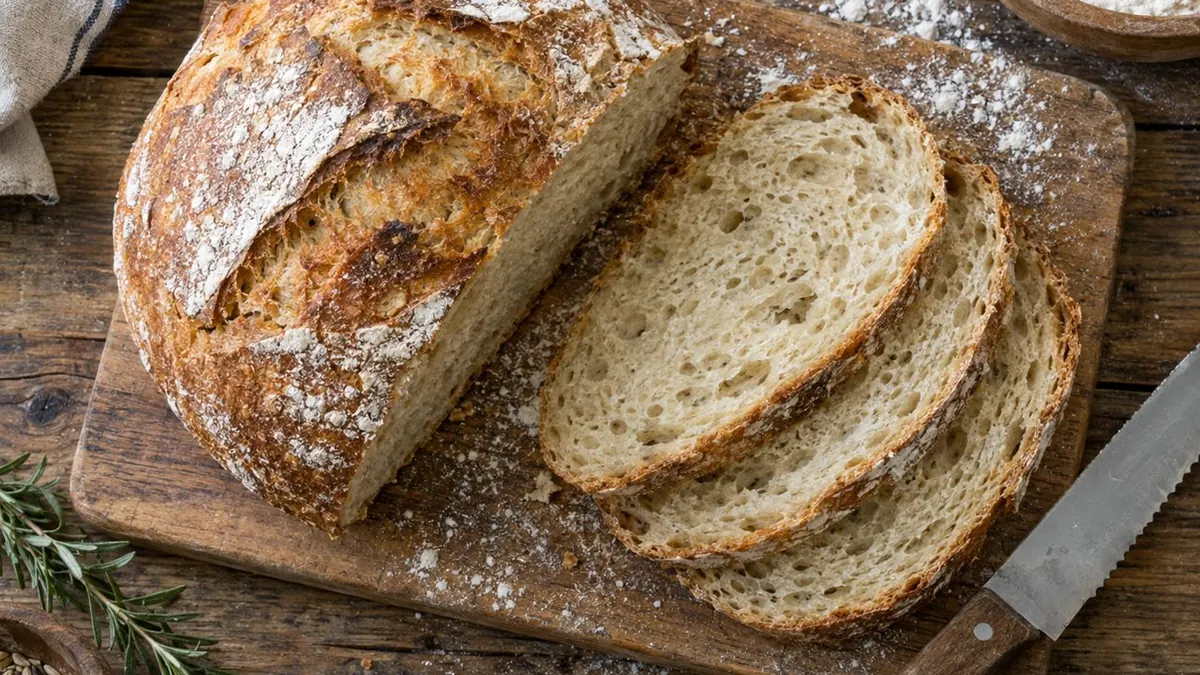
Can You Bake Bread Without Kneading? A No-Knead Loaf and Soft Sandwich Bread
Why now: Rising Trends shows bread and baking focused cooking searches among the growing topics in November 2026, including skillet flatbread and pinsa style doughs.
Bread needs only flour, water, salt and yeast. The difficulty people expect rarely appears, because most of the work is waiting. This guide gives two beginner recipes: a no knead crusty loaf that needs almost no effort and a soft sandwich loaf for lunches. Both are free of animal fat and alcohol.
How bread works
Yeast eats the sugar in flour and produces gas, which makes the dough rise. Salt controls the yeast and adds flavor. Kneading or time lets gluten form, which gives the loaf structure. A hot oven creates steam and a crisp crust. Temperature matters: warm water speeds yeast, cold slows it.
Recipe 1: No knead crusty loaf
Time: 18 hours, 15 minutes of work.
- 3 cups (400 g) bread flour
- 1 1/2 teaspoons salt
- 1/4 teaspoon instant yeast
- 1 1/2 cups (350 ml) cool water
Mix everything in a bowl until no dry flour remains. The dough will be shaggy and sticky. Cover and let it rest at room temperature for 12 to 18 hours. Turn it onto a floured surface, fold it over itself a few times and shape it into a ball. Rest on parchment for 1 to 2 hours, covered. Preheat the oven with a lidded heavy pot inside to 230 C (450 F). Lower the dough, in its parchment, into the hot pot, cover and bake for 30 minutes. Remove the lid and bake for 15 minutes more until deep golden. Cool on a rack for an hour.
Recipe 2: Soft sandwich loaf
- 3 1/2 cups (450 g) bread flour
- 2 teaspoons instant yeast
- 1 1/2 teaspoons salt
- 2 tablespoons sugar
- 1 1/4 cups (300 ml) warm milk
- 3 tablespoons soft butter
Mix the dry ingredients, add milk and butter and knead for 8 to 10 minutes until smooth. Let the dough rise in a covered bowl for 1 hour until doubled. Shape into a loaf and place in a greased tin. Let it rise for 45 minutes. Bake at 180 C (350 F) for 30 to 35 minutes until golden and hollow sounding when tapped. Brush the top with butter for a soft crust.
Tips for success
Use a kitchen scale, since measuring flour by cups varies. Keep the water lukewarm, about 30 C. Do not use hot water, which kills yeast. Let the dough rise in a warm spot. Use a hot oven and steam for a crisp crust. Cool bread before slicing so that the crumb sets.
Variations
Add a handful of seeds, such as sesame or sunflower. Replace a third of the flour with whole wheat. Add chopped olives and rosemary for a savory loaf. Knead in cinnamon and raisins for a breakfast bread.
Storage
Keep bread in a paper bag or bread box for two days. Slice and freeze for up to three months. Toast slices from frozen.
Troubleshooting
Dense loaf: Not enough rise or too much flour. Flat loaf: Over proofed or yeast was old. Pale crust: The oven was not hot enough. Gummy crumb: Sliced too early or underbaked.
Halal notes
Basic bread contains no animal products. Some commercial breads contain emulsifiers or animal derived additives such as L cysteine. Check labels for shop bought loaves. Use butter or oil in homemade bread.
Using leftover bread
Make croutons by cubing and baking with oil and salt. Make breadcrumbs. Make French toast. Add to soups such as tomato or lentil. Use stale bread for bread pudding with milk, eggs, sugar and cinnamon.
Common mistakes
Adding too much flour while kneading makes bread dry. Skipping the second rise gives a dense loaf. Opening the oven early lets out steam. Using expired yeast means no rise at all.
Frequently asked questions
Can I use active dry yeast? Yes. Dissolve it in warm water first, and use a little more.
Why is my dough so sticky? No knead dough is wet. Use floured hands.
Do I need a Dutch oven? It helps, but a tray with a pan of hot water also works.
Flatbread from the same dough
Mix 2 cups of flour, 1 teaspoon of salt, 1 teaspoon of yeast, 3/4 cup of warm water and a spoon of oil. Knead for 5 minutes and rest for 1 hour. Divide into 6 balls, roll thin and cook in a hot dry pan for 1 to 2 minutes per side. These puff up and make quick soft flatbreads for wraps and dips.
Overnight rise for better flavor
Cold fermentation in the fridge for 12 to 24 hours develops flavor and gives a better crust. Mix the dough in the evening, refrigerate, then shape and bake the next day. This also fits busy schedules.
Equipment
A kitchen scale, a large bowl, a heavy lidded pot or baking tray and a rack are all you need. A thermometer helps, since bread is done at 95 to 99 C inside. A bench scraper makes handling sticky dough easier.
The takeaway
Bread is mostly patience. Start with the no knead loaf, and move to the soft loaf when you want something for sandwiches.