Can Food Calm Inflammation? Simple Halal Meals Built on Whole Foods
Why now: “Anti-inflammatory diet” is the second biggest cooking and recipe trend of 2026 on Rising Trends, at about 450,000 searches and roughly 26% year over year growth.
People use the phrase anti-inflammatory diet to describe an eating pattern based on whole, minimally processed foods: vegetables, fruit, legumes, whole grains, nuts, fish, olive oil and herbs and spices, with less sugar, refined flour and heavily processed food. It is not a cure for any illness, and the science is still developing, so treat it as a way to eat more plants and less junk rather than a medical plan. The good news for halal cooks is that many everyday dishes already fit, and there are plenty of easy ways to adjust the rest.
The idea in plain words
Researchers have linked patterns of eating that are high in fiber, colorful plants and healthy fats with better health markers, and patterns high in sugar and refined, processed food with the opposite. An anti-inflammatory style plate puts the first group in front. If you have a health condition, ask your doctor or a registered dietitian before making big changes.
What to eat more of
- Leafy greens, broccoli, peppers, tomatoes, carrots and beets
- Berries, apples, citrus and pomegranate
- Lentils, chickpeas, beans and whole grains such as oats, brown rice and bulgur
- Nuts and seeds, including walnuts, flax and chia
- Olive oil as the main fat
- Oily fish such as sardines, mackerel and salmon
- Spices and herbs such as turmeric, ginger, garlic, cumin, black pepper, cinnamon and parsley
What to eat less of
Sugary drinks and sweets, white bread and pastries, deep fried and packaged snack foods, and processed meats. For halal households, this also means being careful with processed foods that include gelatin or alcohol based flavorings.
Halal considerations
Choose halal chicken, lamb and beef, and keep portions of red meat modest. Use fish, eggs, beans and lentils more often. Avoid cooking wines and alcohol based extracts such as regular vanilla extract, and use alcohol free alternatives.
Three easy meals
1. Golden lentil soup. Cook 1 cup red lentils with 1 chopped onion, 2 cloves garlic, 1 teaspoon turmeric, 1 teaspoon cumin and 4 cups water for 25 minutes. Blend if you like, then add lemon juice and a little olive oil. Serve with whole wheat bread and salad.
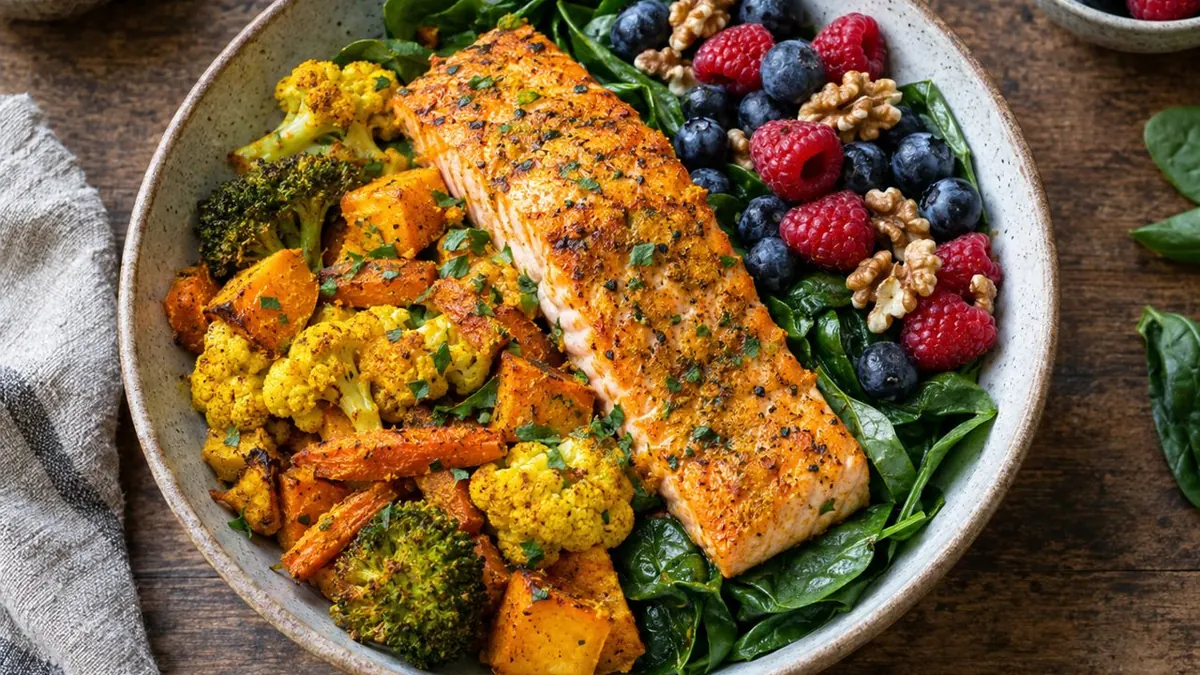
2. Sheet pan salmon and vegetables. Place salmon fillets, broccoli and sliced peppers on a tray. Toss with olive oil, garlic, lemon, salt and pepper. Roast at 200 C (400 F) for 15 to 18 minutes.
3. Chickpea and spinach curry. Fry an onion, garlic and ginger in oil. Add 1 teaspoon each of turmeric, cumin and coriander, then a can of tomatoes and a can of chickpeas. Simmer for 15 minutes and stir in spinach. Serve over brown rice.
A simple turmeric ginger tea
Simmer 1 cm of fresh ginger and 1 cm of fresh turmeric, sliced, in 2 cups of water for 10 minutes. Add a pinch of black pepper, lemon juice and a little honey if you like. Strain and drink warm. It is a pleasant drink, not a treatment.
Tips for building the habit
Start with breakfast. Oats with nuts and fruit, or eggs with vegetables, set the tone.
Cook once and eat twice. Make a big pot of soup or beans and use it across several meals.
Read labels. Look for added sugar, refined oils and unwanted ingredients.
Drink water. Keep a bottle nearby and swap sweet drinks for water, tea or sparkling water with lemon.
Be realistic. You do not need to give up all treats. Aim for most meals to be based on whole foods.
Eating this way in Ramadan
Break your fast with dates and water, then a bowl of soup. Follow with a plate that is half vegetables, one quarter protein and one quarter whole grains. At suhoor, choose oats, eggs, yogurt, nuts or beans, which release energy slowly. Avoid heavy fried foods and sugary desserts every night, and keep sweets for a few evenings a week.
A sample day of anti-inflammatory halal eating
Breakfast: Oats cooked in milk with chopped walnuts, blueberries and a pinch of cinnamon, or scrambled eggs with spinach and tomato.
Lunch: A lentil and vegetable soup with turmeric and cumin, a slice of whole grain bread and a side salad dressed with olive oil and lemon.
Snack: A small handful of almonds and an orange, or plain yogurt with a few pomegranate seeds.
Dinner: Baked salmon or halal chicken with roasted sweet potato and broccoli, finished with a squeeze of lemon.
Shopping list for the week
Keep oily fish, olive oil, nuts, berries, leafy greens, beans, lentils, whole grains, garlic, onions, ginger and turmeric on your list. Buy halal chicken and lamb in modest amounts and trim visible fat. Choose plain yogurt without added sugar. Keep processed snacks to a minimum, since they tend to be high in refined flour, sugar and salt.
Common mistakes
Expecting one food to do everything is the most common mistake. The pattern across weeks matters more than a single meal. Another is overdoing supplements. Food comes first, and if you want to take a supplement you should talk to a doctor.
The takeaway
An anti-inflammatory way of eating is mostly a return to simple, colorful, home cooked food. It matches well with traditional halal cooking and is easy to start. This article is general food information and not medical advice.
Frequently asked questions
Do I have to avoid all meat? No. Many versions of this style of eating include poultry and fish and a small amount of red meat. Focus on proportion: more plants, fewer processed foods.
Is turmeric enough on its own? No single food does the job. Turmeric is tasty and widely used, but the overall pattern matters far more than one spice. Black pepper and a little fat help the body absorb turmeric, which is why they are often cooked together.
What about sweets? Enjoy them in small portions. Fruit, dates with nuts, yogurt with honey and baked apples are good options for dessert.
How long before I notice a difference? It varies, and some people notice better energy and digestion within weeks. Do not expect miracles, and speak with a professional if you have symptoms.