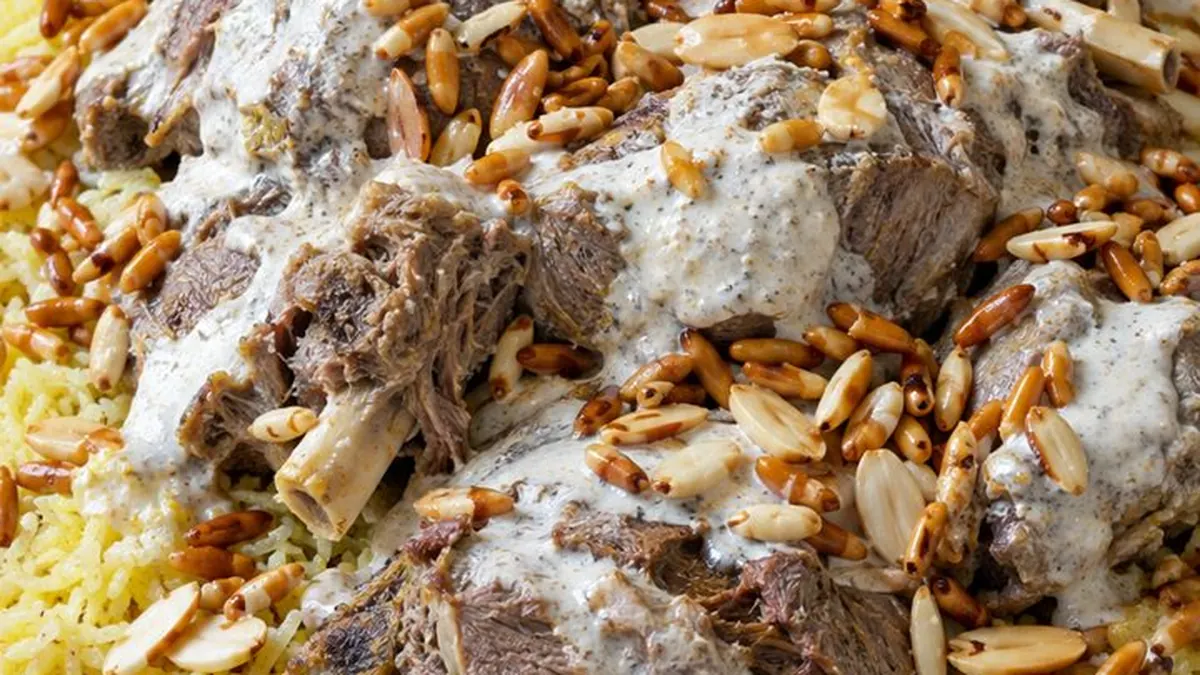
Why Is Mansaf Jordan's Pride? The Story and How to Cook It
Mansaf is a festive dish of tender lamb cooked in a tangy, creamy sauce made from dried fermented yogurt, served over rice on a large platter. It is the national dish of Jordan, and it is also loved in Palestine and across the Levant. It is a dish for sharing, for weddings, for holidays and for welcoming guests. It is made with halal lamb, which makes it naturally suited to a halal kitchen.
The story of mansaf
Mansaf is linked to the pastoral and Bedouin way of life, where meat and dairy from sheep and goats were close at hand. The sauce is built on jameed, a hard, dried yogurt made from sheep or goat milk. Dried jameed keeps for a long time without refrigeration, which made it practical for people who traveled with their flocks.
Writers on Jordanian food explain that today’s mansaf developed in the early twentieth century from an older Bedouin recipe, and that it became closely tied to Jordanian national identity as the country took shape. It is eaten at celebrations, and it is a symbol of hospitality and community. In 2022 UNESCO added Al-Mansaf in Jordan to its Representative List of the Intangible Cultural Heritage of Humanity.
The traditional way to eat it is from a shared platter. Layers of flatbread are placed on the bottom, then rice, then meat, then a scatter of toasted almonds and pine nuts. The sauce is poured over, or served in bowls alongside.
Ingredients (serves 6 to 8)
- 1.2 kg halal lamb shoulder or leg, in large pieces, on the bone
- 2 jameed balls (about 250 g), or 4 cups (about 1 kg) full-fat plain yogurt plus 1 cup of milk as a substitute
- 1 onion, quartered
- 2 bay leaves, 1 cinnamon stick, 4 cardamom pods
- 1 tsp salt, 1/2 tsp black pepper
- 3 cups (600 g) medium-grain rice
- 3 tbsp ghee or butter
- 1/2 tsp turmeric (optional, for yellow rice)
- 1/2 cup blanched almonds and 1/4 cup pine nuts
- Thin flatbread (markook or lavash) for the base
- Chopped parsley
Method with jameed
- Break the jameed into pieces and soak it in warm water for 12 to 24 hours until soft. Blend it with enough water to make a smooth, thin liquid and strain it through a sieve.
- Boil the lamb in water with the onion, bay, cinnamon, cardamom, salt and pepper. Skim the foam and simmer for 1.5 to 2 hours, until tender.
- Strain the lamb stock and set the lamb aside.
- Pour the jameed liquid into a pot and heat it gently, stirring in one direction all the time, to prevent it from separating. Add some of the lamb stock to thin it. Simmer for 20 minutes.
- Add the lamb pieces to the sauce and keep warm.
Method with yogurt (a substitute)
If you cannot find jameed, use full-fat yogurt. Whisk 1 kg of yogurt with one beaten egg white, or 1 tablespoon of cornstarch dissolved in water, so it does not curdle. Stir over low heat in one direction until it reaches a gentle simmer. Add lamb stock until it has the consistency of a thin cream, then add the lamb. The taste is milder than jameed, but it is a reliable home version.
The rice
Rinse the rice until the water runs clear. Cook it in ghee with the turmeric, then add double its volume of lamb stock or water, and salt. Bring to a boil, cover, and cook on low heat for 15 minutes. Rest for 10 minutes and fluff with a fork.
To assemble
Place the flatbread on a large platter. Spoon the rice over it. Arrange the lamb on top. Fry the almonds and pine nuts in ghee until golden and scatter them over. Sprinkle with parsley. Serve the sauce in bowls so everyone can pour what they like.
Tips
Stir the yogurt sauce in one direction only. Many cooks say this stops it from splitting, and it is a tradition worth following. Never cover the sauce with a lid while it simmers, and never let it come to a hard boil. Use bone-in lamb for the best flavor. If the sauce tastes too sharp, add more stock. If it is too mild, add a little more jameed.
Variations
Chicken mansaf is a lighter version, often made with bone-in chicken thighs and cooked in 40 minutes. Some cooks serve it with bulgur instead of rice. In some regions the sauce is thickened further and served as a stew.
Halal notes
Use halal lamb. The dish contains no alcohol or pork. Check that the ghee, yogurt and jameed come from reliable sources.
Frequently asked questions
Where can I find jameed? Middle Eastern grocery stores sell it, often as dried balls or as a liquid concentrate. You can also order online.
Why does my sauce split? Yogurt can curdle with high heat or stirring in different directions. Use full-fat yogurt, add cornstarch or egg white, stir in one direction, and keep the heat low.
Can I make it ahead? Yes. Cook the lamb a day ahead and reheat it in the sauce. Cook the rice fresh.
Sources
Facts about mansaf’s cultural role and the UNESCO listing come from the UNESCO Intangible Cultural Heritage page (https://ich.unesco.org/en/RL/al-mansaf-in-jordan-a-festive-banquet-and-its-social-and-cultural-meanings-01849), and the description of its evolution comes from FWT Magazine (https://fwtmagazine.com/jordans-food-mirrors-history/).
Serving etiquette and hospitality
In Jordan, mansaf is a dish of honor. A host serves it to guests with great pride, often on a large shared tray, and guests eat together. The meat is placed in front of the guests as a sign of respect. If you serve it at home, bring the platter to the center of the table, put out plenty of bowls of sauce, and let everyone help themselves. Many families serve a simple salad of cucumber and tomato on the side, and a pot of hot tea afterward.
Planning a gathering
For a large group, double the amounts and cook the lamb a day ahead. Cooling the meat in its stock overnight makes it more tender. On the day, reheat the lamb gently in the sauce and make the rice fresh so it is light and fluffy.