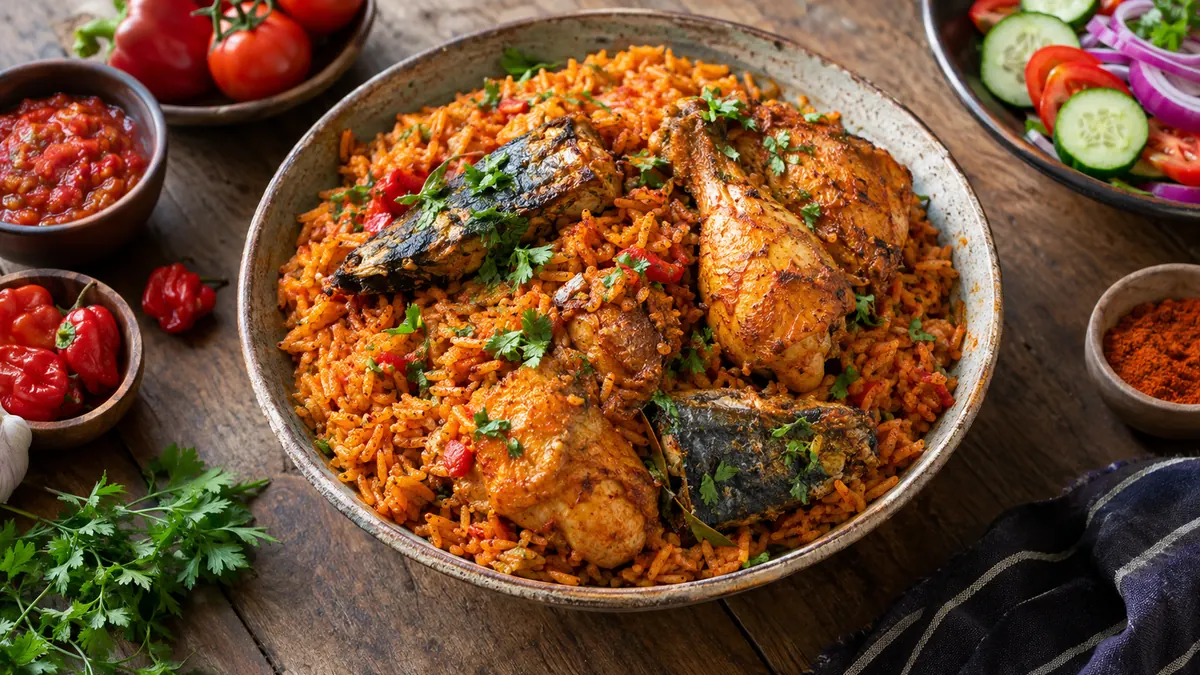
Who Makes the Best Jollof Rice? The Story and a Smoky One-Pot Recipe
Jollof rice is a red-orange rice dish cooked in a base of tomatoes, onions and peppers, and loved across West Africa. It is a centerpiece at parties, weddings and holidays. It is also the subject of a famous friendly debate: which country makes it best? This recipe makes a smoky chicken jollof with no alcohol and no pork, using halal chicken.
The story of jollof
Many food writers trace jollof rice to Senegal, where the dish is called ceebu jen in Wolof, and thieboudienne in French spelling. It is traditionally made with rice, fish and vegetables in a tomato-based sauce. The BBC and other sources link its origins to the Wolof people and the Jolof Empire, which stretched across parts of what is now Senegal, the Gambia and Mauritania, around the fourteenth century.
As people moved and traded across West Africa, the recipe changed. Cooks in Nigeria, Ghana, Sierra Leone, Liberia and other countries developed their own versions, using local rice, spices and proteins. In 2021 UNESCO recognized ceebu jen as part of the world’s intangible cultural heritage.
The jollof debate
Nigerians and Ghanaians each say theirs is best, and the Senegalese point to the dish’s origin. Nigerian jollof is often long-grain parboiled rice with a smoky flavor from cooking at the bottom of the pot. Ghanaian jollof often uses fragrant basmati or jasmine rice and spicier seasoning. The debate is good-natured, and all versions are delicious.
Ingredients (serves 6)
- 3 cups (600 g) long-grain parboiled rice
- 6 ripe tomatoes (or 1 can, 400 g, plus fresh)
- 2 red bell peppers
- 1 to 2 scotch bonnet or hot peppers (to taste)
- 2 onions, one for blending, one sliced
- 1/3 cup (80 ml) vegetable oil
- 3 tbsp tomato paste
- 2 tsp curry powder, 1 tsp dried thyme, 1 tsp paprika
- 2 bay leaves
- 2 tsp salt, 2 stock cubes (halal)
- 3 cups (720 ml) chicken stock or water
- 1 kg halal chicken pieces, seasoned and grilled or fried
- Fried plantain to serve
Method
- Blend the tomatoes, red peppers, hot peppers and one onion until smooth.
- Heat the oil in a heavy pot. Fry the sliced onion for 3 minutes, then add the tomato paste and cook for 4 minutes, stirring.
- Add the blended mixture and cook on medium heat for 20 to 25 minutes, stirring now and then, until the sauce reduces and the oil rises to the top. This step is the secret to good jollof.
- Add the curry powder, thyme, paprika, bay leaves, salt and stock cubes.
- Wash the rice until the water is clear and drain. Add it to the pot with the stock. The liquid should barely cover the rice.
- Stir once, cover tightly with foil and a lid, and cook on low heat for 30 to 35 minutes. Do not stir during this time.
- Check the rice. If it is firm, add a splash of water and steam for 10 more minutes. Fluff with a fork.
- Serve with the chicken, fried plantain and a fresh salad.
Tips
Reducing the sauce is the most important step. A watery sauce makes mushy rice. Use less liquid than you think. If you want a smoky taste, let the bottom layer of rice brown slightly. Many cooks call this the “party jollof” flavor. If your rice is still hard, add hot water, not cold, and steam again.
Variations
Make fish jollof with firm white fish, as in the Senegalese ceebu jen, with vegetables such as carrots, cassava and eggplant. Make a vegetarian jollof with mixed vegetables and chickpeas. Add a few cloves of garlic and a thumb of ginger to the blend for more depth.
Halal notes
Use halal chicken and halal stock cubes. The dish needs no alcohol. Check that the seasoning mixes are free from ingredients you avoid.
Storage
Keep leftovers in the fridge for up to three days. Reheat with a splash of water in a covered pan or microwave. Rice should be cooled and refrigerated within an hour or two of cooking.
Frequently asked questions
Why is my jollof pale? Not enough tomato paste or too little reduction. Cook the paste and sauce until darker and the oil rises.
Can I use basmati? Yes. Ghana-style jollof often uses fragrant rice. Reduce the liquid by about 10 percent.
How spicy is it? It depends on the peppers. Use fewer hot peppers for a mild version.
What is the difference between jollof and ceebu jen? Ceebu jen is the Senegalese original, usually with fish and vegetables. Jollof is the name used in many other countries, with local changes.
Sources
Origins and UNESCO recognition are covered by the BBC (https://www.bbc.com/travel/article/20210607-jollof-wars-who-does-west-africas-iconic-rice-dish-best), The Conversation (https://theconversation.com/who-invented-jollof-rice-senegal-beats-ghana-and-nigeria-to-the-title-197352), and UNESCO’s Flavours and Voices recipe page (https://unescoref.org/flavour-and-voices/recipes/ceebu-jen/). Because several countries claim the dish, the history is presented as shared.
Making it for a party
Jollof is a party dish because it feeds many people from one pot. For a large group, cook the sauce in one big pot and the rice in a second pot if needed, so the grains do not pile too deep. Keep the finished rice warm in a covered pan in a low oven. Serve with grilled or fried chicken, fried plantain, coleslaw, and a simple salad of tomato, onion and cucumber. A cold drink such as hibiscus tea, called bissap in Senegal and zobo in Nigeria, goes well with the spice.
Building more flavor
A few small steps make a big difference. Toast the curry powder in the oil for 30 seconds before adding the tomato paste. Add a spoon of butter at the end for gloss. Use a splash of lime juice when serving to brighten the flavor. For a smokier result, cook the sauce longer, until it has darkened to a deep red. Taste the sauce before adding the rice: it should taste slightly too salty, because the rice will soften the salt.