Who Invented Hummus? The Story and the Trick to Silky Smooth
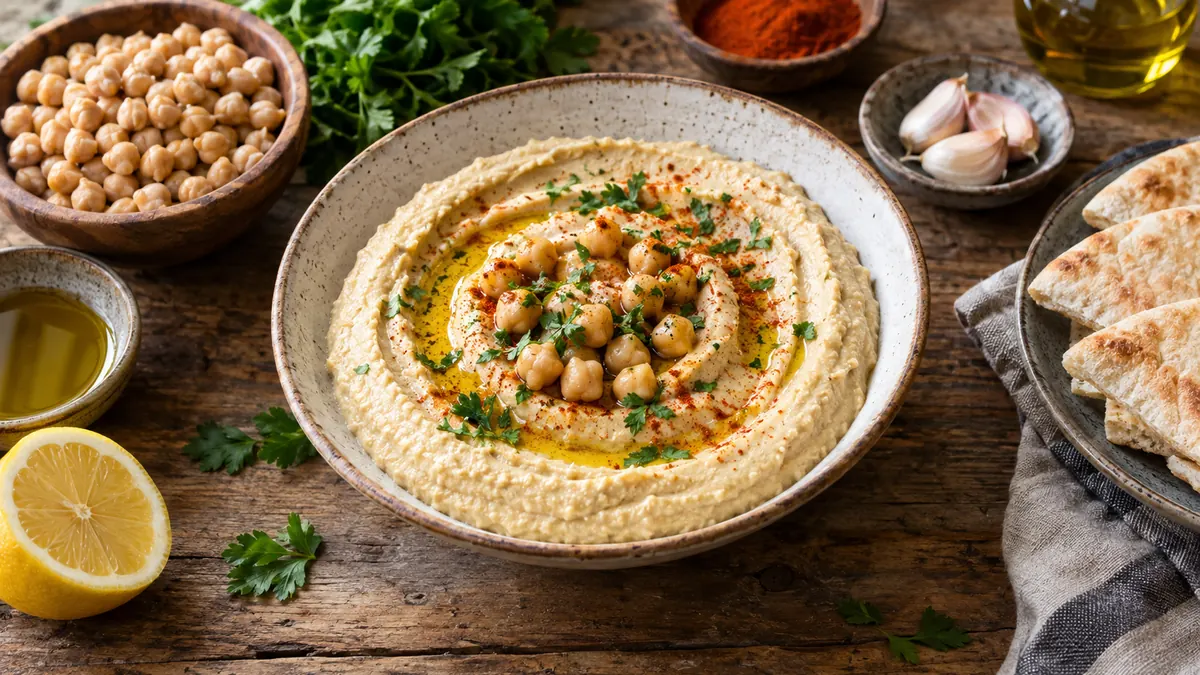
Hummus is a creamy dip of chickpeas, tahini, lemon and garlic, finished with a pool of olive oil. It is on tables across the Middle East, and it is now a fridge staple in much of the world. It is naturally plant-based and easy to keep halal. The story behind it is less clear than the recipe, and that is part of the fun.
What does the word mean?
The word hummus comes from the Arabic word for chickpeas. In Arabic, the full name of the dish is hummus bi tahini, which means chickpeas with tahini. When people order hummus in the Middle East, they are asking for the chickpeas, and the sesame paste comes along with it.
A very old ingredient
Chickpeas are among the oldest cultivated legumes. They have been grown and eaten in the Near and Middle East for thousands of years. Food writers note that this does not mean hummus itself is that old. The chickpea is ancient, but we have no clear written record of a chickpea and tahini dip until the medieval period.
One of the earliest recorded mentions appears in a thirteenth-century cookbook linked to Syria. Even so, that does not prove it was invented there. It is more likely that the dish developed gradually across the Levant, with different cooks making their own versions.
Who invented hummus?
Lebanese, Syrian, Palestinian, Turkish, Egyptian and other cooks all treasure hummus, and each group has a claim. Food historians say there is little firm evidence to give credit to a single place. The most honest way to say it is this: hummus is a shared dish of the eastern Mediterranean, made in many homes for many generations.
Ingredients (serves 6)
- 1 1/2 cups (250 g) dried chickpeas, or 2 cans (about 800 g) cooked chickpeas
- 1 tsp baking soda (if using dried chickpeas)
- 1/2 cup (120 g) good tahini
- 3 tbsp lemon juice, plus more to taste
- 1 to 2 cloves garlic
- 1/2 tsp salt
- 1/2 tsp ground cumin (optional)
- 4 to 6 tbsp ice-cold water
- Extra virgin olive oil, paprika or sumac, and parsley to serve
Method
- If using dried chickpeas, soak them overnight in plenty of water with half the baking soda. Drain, then cook in fresh water with the remaining baking soda for 45 to 60 minutes, until completely soft and falling apart. Skim off any skins that float to the top.
- If using canned chickpeas, drain and rinse them. For the smoothest texture, simmer them for 15 minutes with a pinch of baking soda.
- Blend the tahini and lemon juice in a food processor for one minute. The mixture will go thick and pale.
- Add the garlic, salt and cumin and blend for 30 seconds.
- Add the warm chickpeas and blend for 2 to 3 minutes, scraping down the sides.
- With the machine running, add the ice-cold water one tablespoon at a time until the hummus is smooth and fluffy.
- Taste and adjust the salt and lemon.
- Spread on a plate, make a hollow in the middle with a spoon, and fill with olive oil. Sprinkle with paprika and parsley.
The secrets of silky hummus
The first secret is to cook the chickpeas until they are very soft, softer than you would eat them in a salad. The second is to whip the tahini with lemon first, before adding the chickpeas. This builds a creamy base. The third is ice-cold water, which helps the hummus turn light and airy. Finally, be patient with the blending. Three minutes in a food processor makes a clear difference.
Use good tahini. It should be pourable and taste nutty, not bitter. Brands differ a lot, so taste yours straight from the jar. If it tastes bitter, the hummus will too.
Variations
Add roasted red pepper, roasted beetroot, or a spoonful of harissa for color and heat. Top with warm spiced minced halal lamb or beef and toasted pine nuts for a hearty version often served at restaurants. Add a handful of fresh herbs, such as coriander and parsley, for a green hummus. Swap lemon for a little lime juice if you like.
How to serve
Serve hummus with warm pita, fresh cucumber, carrots, olives and pickles. It also works as a sandwich spread, a base for a salad bowl, or a sauce for grilled chicken. Keep it at room temperature for the best flavor and texture.
Halal notes
Hummus is plant-based. Check store-bought tubs for additives and make sure no alcohol-based flavorings are used. At home, you control everything.
Storage
Keep hummus in an airtight container in the fridge for up to five days. Pour a thin layer of olive oil on top to keep it fresh. Stir before serving. You can freeze it for up to three months. Thaw in the fridge and stir in a little water and lemon.
Frequently asked questions
Why is my hummus grainy? The chickpeas were not soft enough, or the skins stayed in. Cook them longer with baking soda, and blend for several minutes.
Why is it bitter? Old or low-quality tahini, or too much raw garlic. Use fresh tahini and start with one clove.
Can I make it without tahini? You can, but it will not be traditional hummus. It becomes a chickpea dip. Use olive oil and a little yogurt for creaminess.
Is hummus healthy? It contains protein and fiber from chickpeas and healthy fats from tahini and olive oil. It is a good option in moderation.
Sources
The meaning of the word and the history of chickpeas come from the University of Chicago Press excerpt on Middle Eastern food (https://press.uchicago.edu/ucp/books/book/distributed/H/bo130702920.html) and BBC Travel’s feature on who invented hummus (https://www.bbc.com/travel/article/20171211-who-invented-hummus). Origins are debated, so the history here is a summary of the best available accounts.