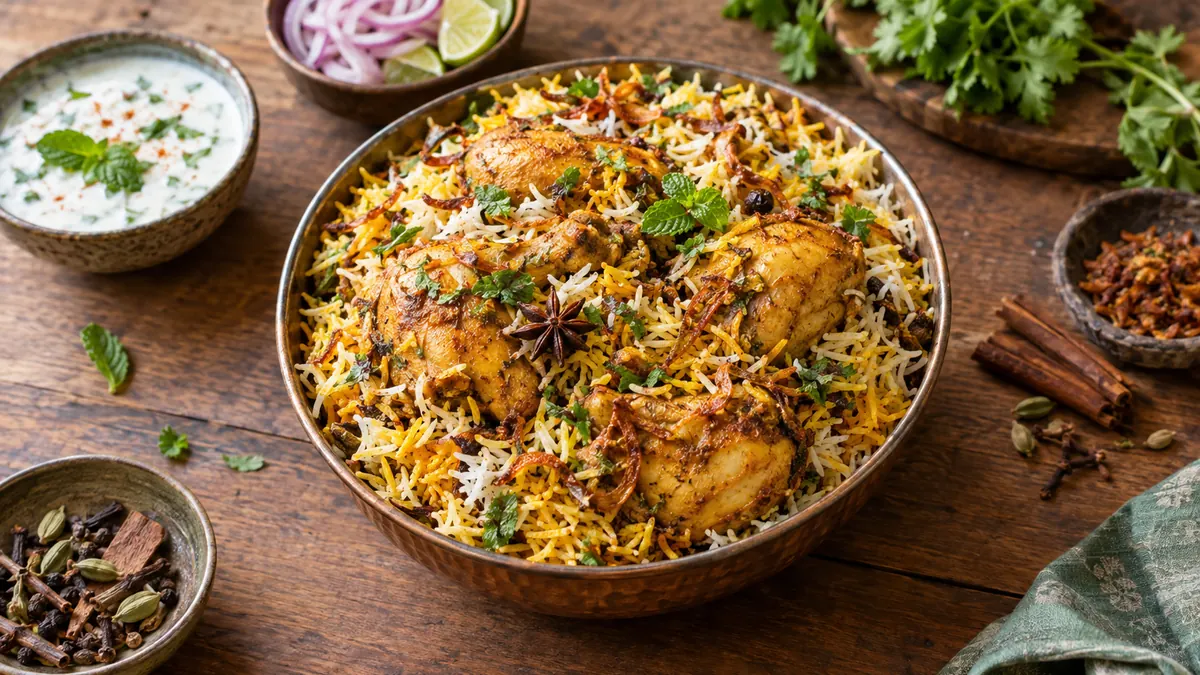
The Royal Story of Biryani and a Fragrant Halal Chicken Recipe
Biryani is a dish of fragrant rice layered with spiced meat, herbs and fried onions, cooked slowly in a sealed pot. It is served at weddings, Eid celebrations and family gatherings across South Asia, the Middle East and beyond. This recipe uses halal chicken and no alcohol or pork.
Where does biryani come from?
The honest answer is that nobody knows exactly. Food historians say the dish is thought to come from Persian rice dishes, and the name is often traced to Persian words related to rice. It became famous in India, where the royal kitchens of the Mughal Empire blended the Persian pilaf tradition with Indian spices and cooking methods.
One popular story says a Mughal queen asked the royal cooks to create a nourishing one-pot meal for soldiers. Stories like this are loved, but they are hard to prove, and historians treat them with care. What is clear is that biryani developed into many regional versions: Hyderabadi, Lucknowi, Kolkata, Sindhi, Malabar and more. Each one has its own spices, rice and method.
What makes it special: dum
Biryani is traditionally cooked on “dum”, which means slow steam cooking in a sealed pot. The pot is covered with a tight lid, sometimes sealed with dough, so steam and aroma stay inside. The meat cooks in its own juices, and the rice absorbs the flavor as it finishes cooking.
Ingredients (serves 6)
For the chicken marinade: - 1 kg bone-in halal chicken pieces - 1 cup (240 g) plain yogurt - 2 tbsp ginger-garlic paste - 1 tsp chili powder, 1 tsp turmeric, 1 tsp garam masala - 1 tsp salt - Juice of 1 lemon
For the rice: - 3 cups (600 g) basmati rice - 2 bay leaves, 4 cloves, 4 cardamom pods, 1 cinnamon stick - 2 tbsp salt for the water
For layering: - 3 large onions, thinly sliced and fried until golden brown - 1 cup chopped fresh coriander and mint - 1/4 tsp saffron soaked in 1/4 cup warm milk - 3 tbsp ghee
Method
- Mix the chicken with the marinade ingredients and refrigerate for at least 2 hours, ideally overnight.
- Wash the rice until the water runs clear. Soak it for 30 minutes and drain.
- Boil plenty of water with the whole spices and salt. Add the rice and boil until about 70 percent cooked, 5 to 6 minutes. It should still have a firm bite. Drain.
- In a heavy pot, spread the marinated chicken in an even layer.
- Top with half the herbs and half the fried onions. Add half the rice. Add the remaining herbs and onions, then the remaining rice.
- Drizzle the saffron milk and melted ghee over the top.
- Cover the pot with foil and a tight lid. Cook on medium for 5 minutes, then on the lowest heat for 35 to 40 minutes.
- Rest for 10 minutes, then open the pot. Gently mix from the bottom, bringing the chicken and rice together.
Tips for perfect biryani
Do not over-boil the rice. It will finish in the steam, and if it is already soft it will turn mushy. Use a heavy-bottomed pot, or place a flat pan under it to prevent the base from burning. Fry the onions slowly until deep golden, but not burnt, since burnt onions taste bitter. Use bone-in chicken because it stays juicy.
Let the biryani rest before serving. The rest allows steam to spread through the layers and settle the grains.
Variations
Make mutton or lamb biryani with halal lamb, cooked 40 minutes longer before layering. Make a vegetable biryani with potatoes, cauliflower and peas. Use less chili for a milder dish. Serve with raita, a yogurt sauce with cucumber, and a simple salad.
Halal notes
Use halal meat and check that your ghee, yogurt and spice mixes contain no additives you avoid. Rose water and kewra water are common in biryani, so choose alcohol-free versions or skip them.
Storage
Store leftovers in the fridge for up to three days. Reheat in a covered pan with a splash of water, or in the microwave. Do not leave cooked rice at room temperature for long periods.
Frequently asked questions
Is biryani the same as pilaf? They are related, but not the same. A pilaf cooks rice and meat together in one pot. Biryani usually layers separately cooked, marinated meat and partially cooked rice.
Why is my rice sticky? It was over-boiled or not rinsed. Rinse well and boil only until 70 percent done.
Can I use boneless chicken? Yes, but reduce the final cooking time by 10 minutes to avoid dryness.
Which rice is best? Long-grain basmati, aged if possible, gives the longest and fluffiest grains.
Sources
Background on biryani’s Persian roots and Mughal development comes from the BBC (https://www.bbc.com/news/world-asia-india-36423412) and Wikipedia’s overview of the dish (https://en.wikipedia.org/wiki/Biryani). The exact origin is debated, so the story is presented as the best available account.
Regional styles to explore
Hyderabadi biryani is known for its marinated meat cooked with the rice in the same pot, with plenty of fried onions and saffron. Lucknowi biryani is more delicate, with gentle spices and a long slow steam. Kolkata biryani often includes potato and a boiled egg, and is lighter in chili. Sindhi biryani is tangy and spicy, with plums and yogurt. Malabar biryani from Kerala uses short-grain rice and coconut-influenced flavors. Trying each one is a good way to see how one idea can become many dishes.
Feeding a crowd
Biryani is perfect for gatherings. Use a larger pot and double the quantities, but do not stack the layers more than 12 cm deep, or the rice at the bottom will overcook. Prepare the marinade the night before, fry the onions in the morning, and assemble the pot an hour before guests arrive. Serve straight from the pot on a large tray, with raita, salad and lemon wedges on the side.