Which 12 Spices Should You Buy First? The Halal Kitchen Spice Cabinet
Why now: Rising Trends shows spice blends and flavor focused cooking among the rising searches of November 2026, including “seasoning bomb” and chili crisp style products.
A well stocked spice cabinet turns a handful of plain ingredients into dozens of different dinners. You do not need fifty jars. Twelve spices cover most of the world’s cuisines. This guide explains each one, what it tastes like, what to cook with it and how to buy and store spices so that they stay fresh.
The twelve
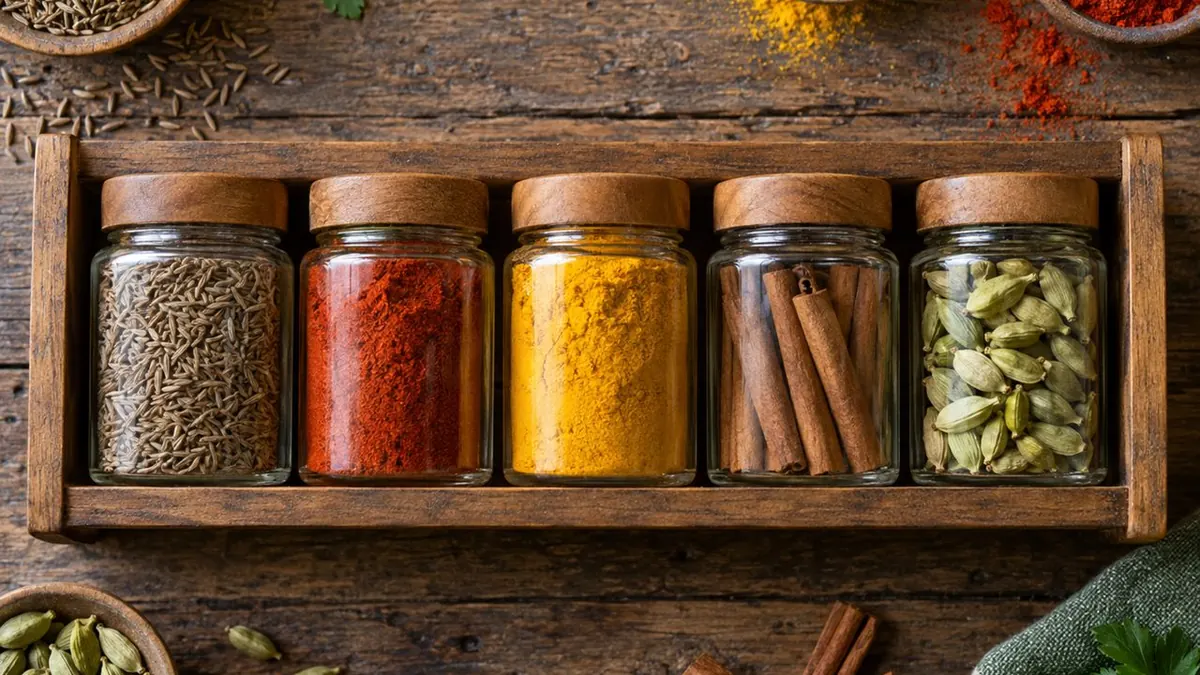
1. Cumin. Earthy, warm and slightly bitter. Used in curries, kofta, beans, rice, tacos and hummus. Buy whole seeds and toast for the best flavor.
2. Coriander seed. Citrusy and mild. Pairs with cumin in most spice blends. Good in marinades and stews.
3. Paprika. Sweet or smoked, with deep red color. Good on chicken, potatoes, eggs and rice. Smoked paprika gives a barbecue flavor without a grill.
4. Turmeric. Earthy and bright yellow. Used in curries, rice and soups. It stains, so use carefully.
5. Cinnamon. Sweet and warm. Used in desserts, tagines, rice dishes and chai. Sticks keep longer than ground.
6. Black pepper. Sharp and pungent. Grind fresh for the best taste.
7. Chili flakes or powder. For heat. Start small and build up.
8. Cardamom. Floral, sweet and slightly minty. Essential in chai, Arabic coffee, rice and desserts.
9. Cloves. Strong and sweet. Use sparingly in rice, stews and spiced drinks.
10. Oregano. Peppery and herbal. For tomato sauces, grilled meats and salads.
11. Sumac. Lemony and tart. Sprinkle on salads, grilled meats, onions and dips.
12. Garlic and onion powder. Convenient, and they blend into rubs and marinades.
Three blends to make from them
Baharat style: Mix cumin, coriander, paprika, black pepper, cinnamon, cloves and cardamom for meat dishes and rice. Taco mix: Chili powder, cumin, paprika, garlic powder and oregano. Garam masala style: Cumin, coriander, cardamom, cinnamon, cloves and black pepper for curries.
How to use spices
Bloom ground spices in hot oil for 30 seconds at the start of cooking, which releases the flavor. Toast whole spices in a dry pan until fragrant, then grind. Add delicate spices such as cardamom and fresh herbs near the end of cooking. Season in layers, tasting as you go.
Buying and storing
Buy small amounts from shops with a high turnover. Whole spices last 2 to 4 years, and ground ones about a year. Store in airtight jars, away from heat, light and moisture. Do not keep them above the stove. Label with a date. If a spice has lost its smell, replace it.
Halal notes
Pure single spices are plant products and are generally acceptable. Check ready made blends and pastes for hidden ingredients, such as flavorings, animal derived ingredients or alcohol. Buying whole spices avoids many of these issues.
A simple recipe: spiced chicken and rice
Fry an onion in oil with 2 teaspoons of cumin, 1 teaspoon of coriander, 1 teaspoon of paprika and 1/2 teaspoon of turmeric for a minute. Add 600 g of chicken pieces and brown. Add 1 1/2 cups of rice and 3 cups of stock with a cinnamon stick. Cover and simmer for 20 minutes. Rest for 10 minutes and finish with parsley and lemon.
Common mistakes
Adding spices to a dry hot pan burns them. Using too much of a strong spice, such as cloves, overwhelms. Using old spices leaves food bland. Adding spice only at the end leaves a raw taste.
Frequently asked questions
Whole or ground? Whole lasts longer, ground is convenient.
How do I fix a dish that is too spicy? Add yogurt, a little sugar, lemon or more of the base ingredients.
Do spices expire? They lose flavor rather than spoil.
Pairing spices with proteins
Chicken: paprika, cumin, garlic, oregano and lemon. Lamb: cumin, coriander, cinnamon, rosemary and garlic. Beef: black pepper, paprika, cumin and thyme. Fish: coriander, turmeric, chili and lemon zest. Lentils and beans: cumin, turmeric, coriander and chili. Vegetables: cumin, paprika, sumac and oregano.
Spice mistakes to avoid
Do not add all the spices at once to a cold pan. Do not use the same quantity of every spice, since strong ones like cloves or cayenne need a lighter hand. Do not skip salt, because spices work best with proper seasoning. Do not store jars next to the stove.
Easy starter shopping
If you are starting from zero, buy cumin, paprika, turmeric, cinnamon, black pepper and chili flakes first. Add coriander, cardamom and sumac next. Small packs from an ethnic grocery are usually cheaper and fresher than jars from a supermarket.
The takeaway
Twelve spices, bought fresh and stored well, cover a world of cooking. Add one more jar when a new recipe calls for it.