Which Is Better, Ta'ameya or Falafel? The Story and the Crispiest Recipe
Ta’ameya, also called falafel, is one of the most loved street foods in the world. It is a green, crunchy fritter made from ground beans and fresh herbs, tucked into bread with salad and a drizzle of tahini. It is cheap, filling, and completely plant-based, which makes it easy to enjoy in any halal kitchen. But where does it come from, and why are there two versions, one made with fava beans and one with chickpeas?
The story of ta’ameya
Food writers and historians do not agree on every detail, but many say the dish was almost certainly developed in Egypt. In Egypt it is called ta’ameya and is traditionally made from split fava beans, not chickpeas. The word falafel is the name most people know abroad, and it is more often linked to the chickpea version eaten across the Levant.
In Egypt, ta’ameya has a regular place on the breakfast table. It is often eaten with ful medames, a dish of slow-cooked fava beans, and fresh bread. Street carts and small shops sell it every morning, and for many families it is a staple food because it is inexpensive and satisfying.
As the dish traveled through the Levant, cooks adapted it to what they had. Chickpeas were widely grown there, so many cooks used chickpeas in place of fava beans. Over time the name falafel spread with the dish, and today people in many countries claim it as part of their own food culture. The honest answer is that it is a shared dish, with Egypt often credited as the starting point.
Fava or chickpea?
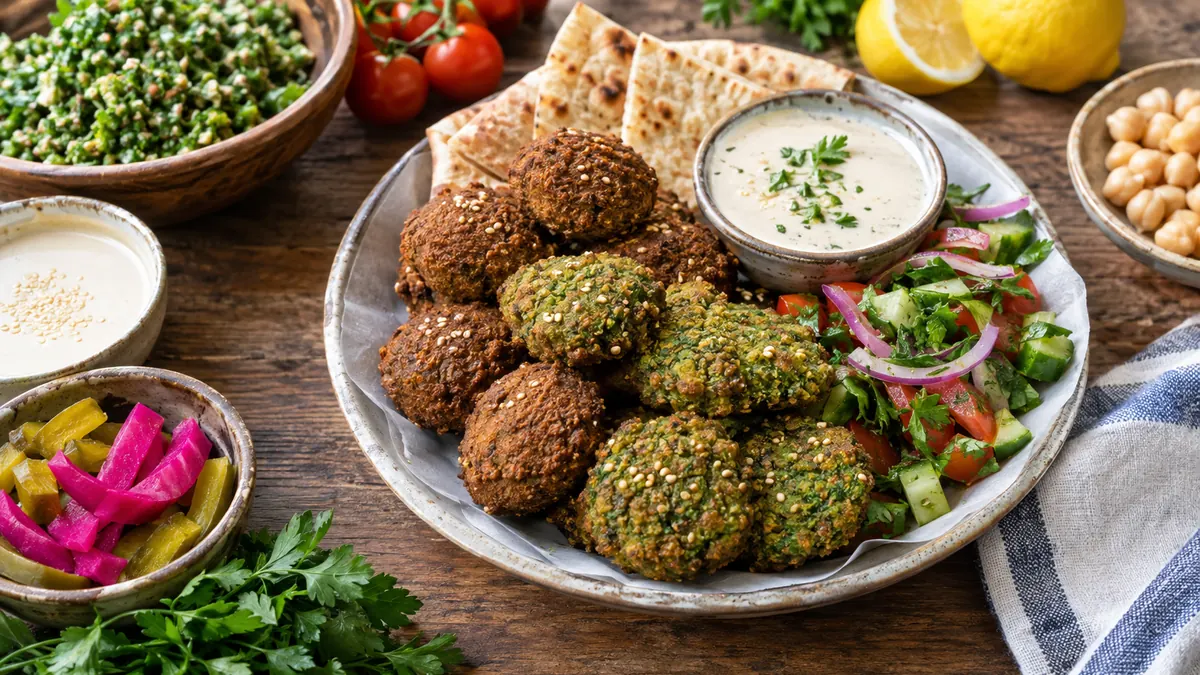
Egyptian ta’ameya uses fava beans and a large amount of fresh green herbs, which is why it is bright green inside. The texture is lighter and a little fluffier. Levantine falafel uses chickpeas, which give a denser, nuttier fritter that is golden and sometimes paler inside. Many cooks mix the two. Neither version is the “right” one. Choose the one you like best, or try both.
Ingredients (makes about 20 pieces)
- 2 cups (400 g) dried split fava beans or dried chickpeas, soaked overnight (never canned)
- 1 large bunch fresh parsley, thick stems removed
- 1 bunch fresh coriander
- 1 bunch fresh dill (optional but traditional in Egypt)
- 1 small onion, roughly chopped
- 4 cloves garlic
- 1 tsp ground cumin
- 1 tsp ground coriander
- 1 1/2 tsp salt
- 1/2 tsp black pepper
- 1 tsp baking soda
- 2 tbsp sesame seeds (for coating)
- Neutral oil for frying
Method
- Soak the beans in plenty of cold water for 12 to 18 hours. They will double in size. Drain well and pat dry.
- Add the beans, herbs, onion and garlic to a food processor in batches. Pulse until the mixture looks like coarse, damp crumbs. Do not process to a paste, or the falafel will be heavy.
- Stir in the cumin, ground coriander, salt and pepper. Rest the mixture in the fridge for 30 minutes.
- Stir in the baking soda just before frying. This makes the inside light.
- Shape the mixture into small balls or flat discs. Roll them in sesame seeds if you like.
- Heat about 5 cm of oil to 180 C (350 F). Fry a few pieces at a time for 3 to 4 minutes, turning once, until deep golden.
- Drain on a rack or paper towel and serve hot.
Tips for crisp results
Use dry-soaked beans. Canned beans are too soft and will fall apart in the oil. Keep the mixture slightly coarse so it holds together without turning pasty. Test one piece in the oil before frying the whole batch. If it breaks apart, stir in a spoon of flour or breadcrumbs. If it is too dense, you have processed it too much.
Do not overcrowd the pot. Too many pieces cool the oil and make the falafel greasy. Fry in small batches and let the oil return to temperature between them.
If you prefer a lighter version, brush the pieces with oil and bake them at 220 C (430 F) for 20 to 25 minutes, turning once. They will be less crisp but still tasty.
How to serve
Serve ta’ameya in pita or flatbread with tomato, cucumber, pickles, lettuce and tahini sauce. For tahini sauce, mix 3 tablespoons of tahini with 3 tablespoons of water, 1 tablespoon of lemon juice, one small grated garlic clove and a pinch of salt. For a full Egyptian-style breakfast, serve with ful medames, boiled eggs, fresh salad and tea.
Halal notes
The dish is naturally plant-based. Use a neutral oil and avoid mixing it with oil that has been used for non-halal foods. If you eat at restaurants, ask whether the fryer is shared with other foods. At home, check that your spices and any bread you use carry no questionable additives.
Storage
Uncooked mixture keeps in the fridge for 24 hours. Cooked falafel keeps for three days in the fridge and reheats well in an oven or air fryer at 190 C (375 F) for 8 minutes. You can also freeze shaped, uncooked pieces on a tray and bag them. Fry them from frozen, adding a minute to the time.
Frequently asked questions
Why did my falafel fall apart? Usually the beans were too wet, the mixture was too fine, or the oil was not hot enough. Dry the beans well, keep the mix coarse, and fry at 180 C.
Can I use canned chickpeas? It is not recommended. Canned chickpeas hold too much water and make the mixture mushy.
Is falafel healthy? It is a good source of plant protein and fiber, especially when baked or fried in fresh oil and served with vegetables. Frying adds fat, so enjoy portions that suit you.
What is the difference between ta’ameya and falafel? Ta’ameya is the Egyptian version, typically made with fava beans and lots of herbs. Falafel usually refers to the chickpea version popular in the Levant and around the world.
Sources
Background on the dish’s Egyptian development and its regional spread comes from History Today (https://www.historytoday.com/archive/historians-cookbook/falafel) and NPR’s report on Egyptian breakfast (https://www.npr.org/2026/08/31/nx-s1-5945114-e1/egypts-beloved-breakfast-is-a-fava-bean-duo-with-ancient-roots). Food origins are often debated, so treat the history as the best available account, not the final word.