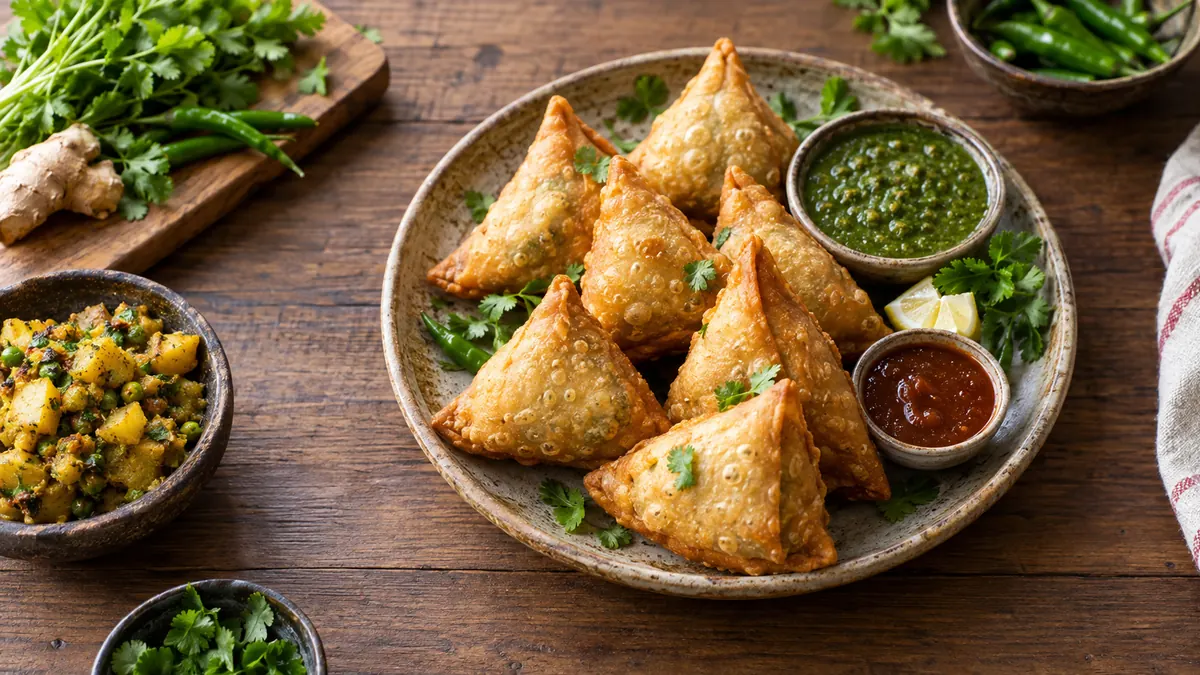
Why Is the Samosa Shaped Like a Triangle? The Story and a Crispy Halal Recipe
The samosa is a small pastry with a big following. A crisp, golden shell wraps a hot filling of spiced potatoes and peas, or minced meat, and it is often dipped in green or tamarind chutney. People eat it as a snack, a starter, a tea time treat and a favorite at the iftar table during Ramadan. It is also one of the most searched snacks in online food trends. Here is where it comes from and how to make it at home.
A pastry that traveled
The BBC has traced the samosa’s history and notes that it is a dish with a long journey. Food historians connect it to similar stuffed pastries in the medieval Middle East and Central Asia, where a triangular pastry called sanbusak or sanbusaj appears in old texts and poems. Travelers, traders and cooks then carried the idea across the region and into South Asia, where it met local spices such as cumin, coriander, ginger and green chili. The result is the samosa we know today. The details, including exact dates, are debated, so it is wise to treat the story as a long, gradual spread rather than a single invention.
Today you will find samosas across India, Pakistan, Bangladesh, East Africa, the Gulf, the UK and many other places. Each region has its own spin. East African samosas are often thin and meat filled. Indian samosas use a thicker, flaky shell with potato. In many Ramadan kitchens, thin pastry sheets are folded into small triangles and fried in large batches.
What goes in a samosa
The classic vegetarian filling is potato and green peas, cooked with cumin seeds, coriander, ginger, green chili and a squeeze of lemon. A halal minced beef or chicken filling is also popular, cooked with onion, garlic, garam masala and fresh coriander. The filling should be dry and well seasoned so the pastry does not turn soggy.
The dough
A simple dough uses flour, oil or ghee, salt and water. Adding ajwain seeds, also called carom seeds, gives a classic flavor. The dough should be firm, not soft, and it needs to rest for half an hour. The oil in the dough is what creates the blistered, flaky crust, so do not skip it.
Halal samosa recipe
Makes about 12. Time: 1 hour 15 minutes.
For the dough:
- 2 cups all purpose flour
- 1/4 cup oil or melted ghee
- 1/2 teaspoon salt
- 1/2 teaspoon ajwain seeds, optional
- About 1/2 cup water
For the filling:
- 3 medium potatoes, boiled and crumbled
- 1/2 cup peas
- 1 tablespoon oil
- 1 teaspoon cumin seeds
- 1 teaspoon grated ginger
- 1 green chili, chopped
- 1 teaspoon coriander powder
- 1/2 teaspoon garam masala
- Salt and lemon juice
- Fresh coriander
- Oil for frying
Method:
- Mix flour, oil, salt and ajwain. Add water slowly to make a stiff dough. Cover and rest for 30 minutes.
- Heat oil in a pan. Add cumin seeds, ginger and chili. Add the potatoes and peas, then the spices and salt. Cook 5 minutes. Add lemon juice and coriander. Cool completely.
- Divide the dough into 6 balls. Roll each into an oval, cut in half to make two half circles.
- Fold each half into a cone, seal the edge with a little water, fill, and pinch the top closed.
- Heat oil to medium. Fry the samosas slowly, turning, until deep golden, about 8 to 10 minutes. Frying slowly keeps them crisp.
- Drain on paper and serve with chutney.
Baking or air frying
For a lighter version, brush with oil and bake at 200 C (400 F) for 25 to 30 minutes, turning once. An air fryer at 190 C works in about 12 to 15 minutes. The shell will be less blistered but still crisp.
Tips
Cool the filling. Hot filling makes the dough soft and hard to seal.
Seal well. Use a dab of water or flour paste, and press firmly so they do not open in the oil.
Fry on medium heat. Too hot and the outside browns before the dough cooks through.
Freeze for Ramadan. Assemble samosas, freeze them on a tray, and fry from frozen on low to medium heat.
Serving
Serve with mint chutney, tamarind chutney or a squeeze of lemon. A cup of tea alongside is a classic pairing.
The takeaway
The samosa is a good example of how food moves. It started as a stuffed pastry on old trade routes and became a daily snack for millions of people. Try the recipe and make a batch for your next gathering.
Frequently asked questions
Why are my samosas bubbly and not smooth? Blisters appear when the dough has enough fat and is fried slowly. Many cooks actually like them, because they are a sign of a flaky shell.
Can I use spring roll or phyllo sheets? Yes. Thin sheets give a lighter, crisper pastry and are common in Ramadan kitchens. Brush with oil if baking.
How long do they keep? Fried samosas keep for two days in the fridge. Reheat in a hot oven to bring back the crunch.
What is a good meat filling? Brown halal minced beef or chicken with onion, garlic, ginger and garam masala, and cook it until dry. Add peas or fresh coriander.
What chutney goes best? Mint and coriander chutney is the classic. Sweet and sour tamarind chutney is also a favorite. Ketchup is common too, especially for children.
Can I make the dough in advance? Yes. Wrap it tightly and keep it in the fridge for a day, then bring it to room temperature before rolling.
Source: https://www.bbc.com/news/magazine-36548445