Are You Cooking Couscous Wrong? The Story and the Right Way
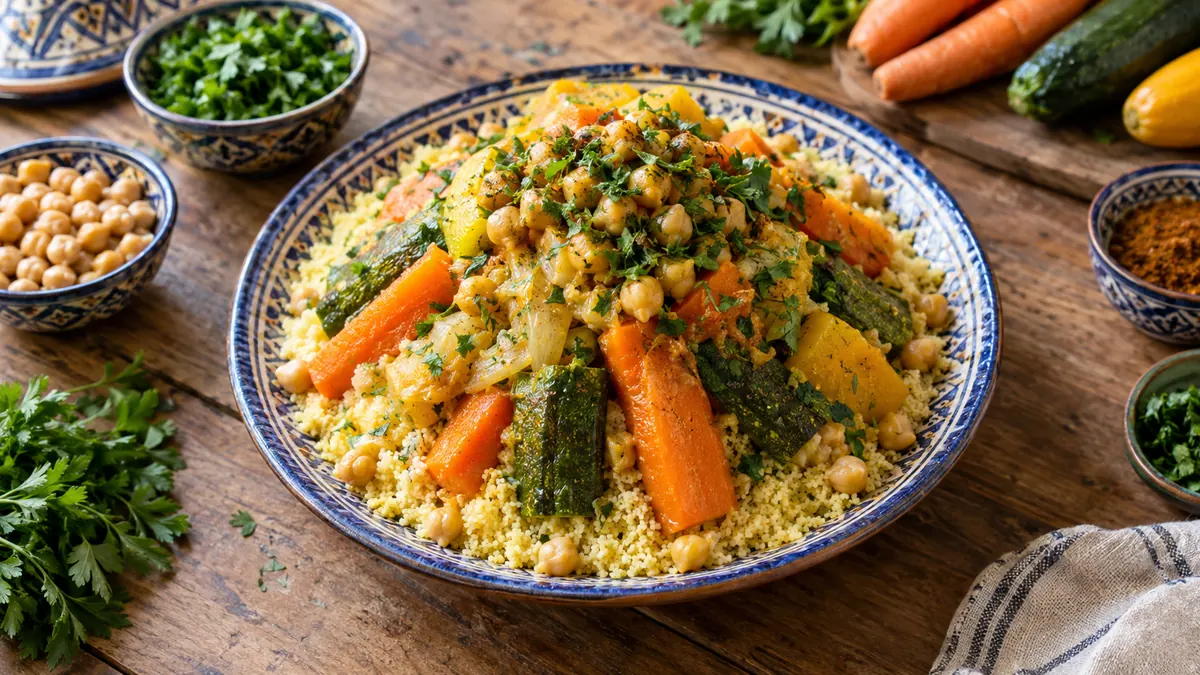
Couscous looks like a grain, but it is really tiny pellets of semolina wheat. Light, fluffy and mild, it carries the flavor of whatever sits on top of it. A plate of couscous with tender meat, carrots, zucchini and chickpeas is a classic family meal across North Africa, and it has become a popular topic online because it is quick, filling and healthy. This article looks at its history, how it is traditionally made, and a halal recipe you can cook at home.
Where couscous comes from
Couscous is widely linked to the Berber peoples of North Africa, the Amazigh communities of Morocco, Algeria and Tunisia. NPR’s report on couscous describes it as a symbol of harmony in a region that has seen many political tensions, since families in every country cook and love it. Food historians generally place its beginnings in the Maghreb many centuries ago, though no one can name the exact date or place. It later spread to Libya, Mauritania, Sicily, parts of France and across the Middle East.
In December 2020, UNESCO added the knowledge, know how and practices related to the production and consumption of couscous to its list of intangible cultural heritage. The listing was a shared one, submitted jointly by Algeria, Mauritania, Morocco and Tunisia. That fact alone shows how much the dish belongs to many people at once.
How couscous is made the traditional way
Traditionally, couscous is made by hand. Cooks sprinkle water and a little flour over semolina in a wide bowl and rub it between their palms until tiny grains form. The grains are sifted, then dried in the sun. This takes patience and skill, and in many homes it is a shared job among women of the family, though many people today buy it ready made.
The cooking method matters as much as the grain. Couscous is steamed in a two part pot called a couscoussier. The stew cooks in the bottom pot, and the grains sit in a perforated top pot, taking on the steam and aroma as they cook. The grains are steamed, removed, fluffed with a little oil or butter and steamed again. This repeated steaming is what gives traditionally cooked couscous its airy, separate texture.
The Friday tradition
In many families, couscous is the meal of Friday after the midday prayer. A large platter is set in the center of the table, and everyone eats from it together. This turns a simple dish into a weekly ritual of gathering. It also appears at weddings, celebrations and religious holidays, often topped with halal lamb or chicken and a rich vegetable stew.
A halal couscous recipe, simple version
You do not need a couscoussier at home. This version uses a normal pot and a stovetop.
Serves 4 to 6. Time: 1 hour.
For the stew:
- 3 tablespoons olive oil
- 500 g halal lamb or chicken, in chunks
- 1 large onion, sliced
- 2 cloves garlic
- 1 teaspoon turmeric
- 1 teaspoon ground ginger
- 1 teaspoon cumin
- 1 cinnamon stick
- 2 carrots, 2 zucchini, 1 small turnip, cut in large pieces
- 1 can chickpeas, drained
- 3 tomatoes, chopped
- Salt, pepper and 4 cups water
For the couscous:
- 2 cups medium couscous
- 2 cups hot water or stock
- 2 tablespoons butter or olive oil
- Salt
Method:
- Heat the oil in a large pot. Brown the meat, then add the onion, garlic and spices. Stir for 2 minutes.
- Add the tomatoes and water. Simmer, covered, for 30 minutes for chicken or 50 minutes for lamb.
- Add the carrots and turnip, then simmer 10 minutes. Add the zucchini and chickpeas and cook another 10 minutes.
- Place the couscous in a bowl with salt and oil. Pour in the hot water, cover and wait 5 minutes.
- Fluff with a fork, breaking up any lumps with your fingers. Steam briefly over the stew if you like, with a lid on.
- Pile the couscous on a platter. Make a well in the center and top with meat and vegetables. Ladle some broth over the top.
Tips for better couscous
Use hot liquid, not boiling on the stove. Pouring hot water over the grains and covering them is enough. Boiling them in water makes them mushy.
Fluff by hand. Rub the grains gently with oiled fingers to separate them.
Season the grains. A pinch of salt and a little oil is the difference between bland and good.
Add sweet touches. Some families add raisins and caramelized onions on top, which is called tfaya in Morocco.
Variations
Seven vegetable couscous is a favorite meatless choice. Tunisian couscous often uses a spicier red sauce. Sweet couscous with cinnamon, nuts and dates appears as a dessert or breakfast. All of them follow the same idea: a gentle grain that carries a flavorful stew.
The takeaway
Couscous is humble, flexible and tied to family and community. Make it on a Friday, put it in the middle of the table and share it.
Frequently asked questions
Is couscous a grain or a pasta? It is made from semolina, which is durum wheat, so it is closer to a tiny pasta than a whole grain, even though it is often cooked like a grain.
Which type should I buy? Medium grain is best for the recipe above. Fine couscous cooks in minutes and suits salads. Large, pearl style couscous, sometimes called moghrabieh or Israeli couscous, is a different product and takes longer.
How do I avoid clumps? Rub the dry grains with a little oil before adding hot liquid, then fluff with a fork after the rest time.
Can I make it ahead? The stew improves overnight. Cook the couscous fresh, or steam leftovers with a splash of water to restore their softness.
Is it healthy? It is a light carbohydrate and works well with vegetables and lean meat. Whole wheat couscous has more fiber if you prefer it.
Source: https://www.npr.org/sections/thesalt/2019/06/27/735429939/couscous-a-symbol-of-harmony-in-northwest-africa-a-region-of-clashes