Why Does Butterfly Pea Flower Tea Change Color? How to Use This Blue Drink
Why now: “Butterfly pea flower” is one of the fastest growing food and drink searches of 2026 on Rising Trends, at about 90,500 searches and roughly 36% year over year growth, and “butterfly pea tea” is up about 148%.
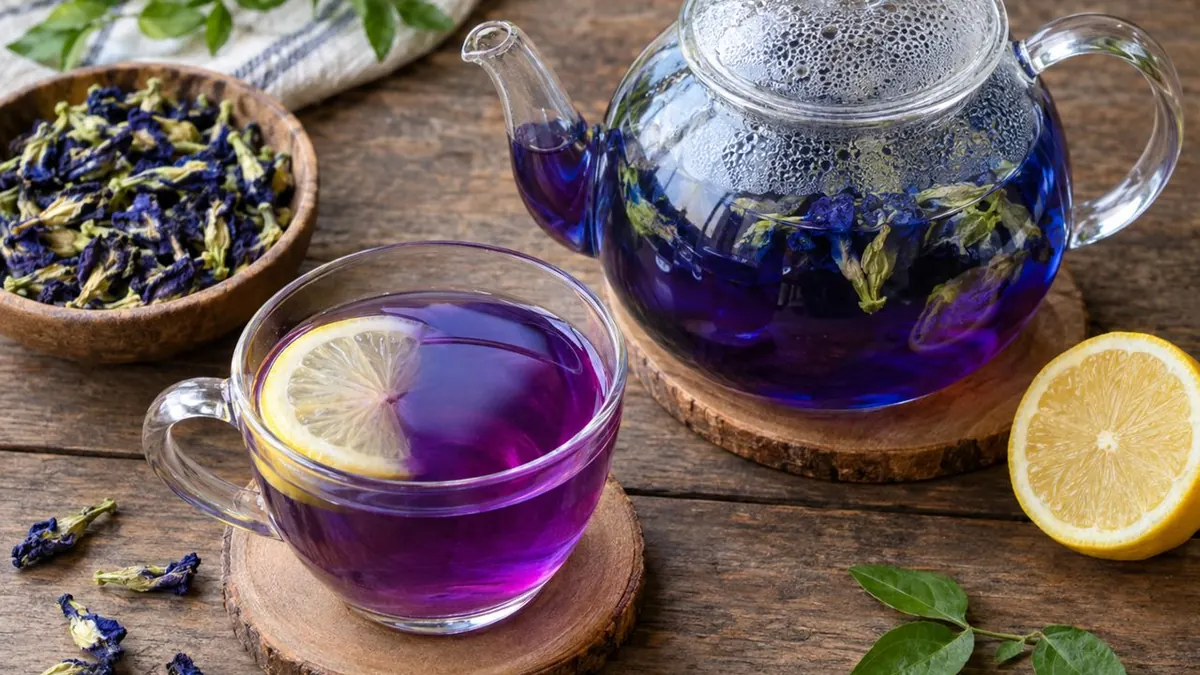
Butterfly pea flower tea is a deep blue drink made from the dried petals of a plant native to Southeast Asia. It turns purple or pink when you add lemon juice, which is why it is popular for drinks that look like magic. It has a mild, earthy flavor, no caffeine and no alcohol, so it is naturally halal, and it is easy to make at home. Here is how to brew it, how to use it and a few drinks and recipes to try.
What it is
The butterfly pea, Clitoria ternatea, is a climbing plant with bright blue flowers. In Thailand, Malaysia, Vietnam and nearby countries, the flowers have long been used as a natural food coloring, for example in Malaysian pulut tai tai, a blue colored glutinous rice dessert, and in Thai drinks. The blue color comes from natural pigments called anthocyanins. When the liquid is acidic, such as lemon, the color shifts toward purple and pink. When it is alkaline, it can turn greenish.
What does it taste like?
It is mild, a little woody and slightly floral, similar to a light green tea without bitterness. Many people add honey, lemon or mint, since the flavor is gentle. Because it has little taste of its own, it is also used mainly as a colorant in rice, noodles, drinks and desserts.
How to brew the tea
Makes 2 cups. Time: 10 minutes.
- Place 5 to 8 dried butterfly pea flowers (or 1 teaspoon of petals) in a cup.
- Add 250 ml of hot water, just off the boil.
- Steep for 5 to 10 minutes, until the water is a deep blue.
- Strain and add honey or sugar, if you like.
- To change the color, add a squeeze of lemon and watch the drink turn violet.
Drinks to try
Color changing lemonade. Fill a glass with ice and fresh lemonade. Slowly pour cold butterfly pea tea over the back of a spoon so it floats in a blue layer on top, then stir to see it blend into purple.
Iced blue latte. Mix cold blue tea with milk, ice and a little honey. The color becomes a soft sky blue.
Blue coconut cooler. Combine cold butterfly pea tea, coconut water and lime juice over ice.
Warm spiced blue tea. Brew with a cinnamon stick, a few cardamom pods and a slice of ginger.
Using it in food
For blue rice, soak 6 to 8 flowers in 1/2 cup of hot water, strain, and use the liquid as part of the cooking water. In Malaysia, this is used for nasi kerabu, a herb rice dish. For blue pancakes, mix a spoon of strong tea concentrate into the batter. For jellies and puddings, add the tea to the liquid before setting it. For a cake glaze, mix powdered sugar with a few drops of concentrate and a pinch of lemon to adjust the shade.
Buying and storing
Look for whole dried flowers with a deep blue color and no stems. They are sold online and in many Asian shops. Keep them in an airtight jar away from light and heat. Powdered versions are also sold and are handy for baking, but check that the product is pure and has no added ingredients you do not want.
Safety and caution
For most people, a cup of the tea is a gentle drink. As with any herbal product, if you are pregnant, breastfeeding, on medication or have a health condition, ask a doctor first. Online claims about health benefits are often exaggerated, so enjoy it for the color and taste rather than as a treatment.
Tips for the best color
Use hot water but not boiling. Very high heat can dull the shade.
Steep long enough. A rich blue needs time.
Add acid last. Add lemon just before serving for the best color change.
Use clear glasses. The color shift is the point of the drink.
Serving ideas for a gathering
Serve a pitcher of the blue tea with a bowl of lemon wedges and let guests squeeze their own to watch the color change from blue to purple. Offer honey, mint and sliced cucumber on the side. For iced versions, freeze some of the tea in ice cube trays so that the drink does not dilute as it melts.
Cooking with the flowers
The dried flowers are also used to color rice and desserts in some Southeast Asian cuisines. A spoonful of the steeped tea gives blue color to sticky rice, and a few drops of lemon turn it purple. Use a small amount, since the flavor is mild and earthy.
Safety and storage
Store dried flowers in an airtight jar away from light. The tea is generally consumed as a herbal drink, but if you are pregnant, nursing or taking medication, check with a doctor before drinking it regularly. General information, not medical advice.
The takeaway
Butterfly pea flower tea is a simple, caffeine free and halal friendly drink that adds color to your table. Try the lemonade trick once and you will see why it is trending. This article is general food information and not medical advice.
Frequently asked questions
Does it contain caffeine? No. It is a herbal infusion and is caffeine free.
Why did my tea turn green? The water may be alkaline. Using filtered or softer water can help, and a drop of lemon brings it back to blue and violet.
Can I make a big batch? Yes. Steep 2 tablespoons of flowers in 1 liter of hot water, cool and store in the fridge for up to 3 days.
Can I freeze it? Yes. Blue ice cubes are fun in lemonade or sparkling water and change color as they melt into acidic drinks.