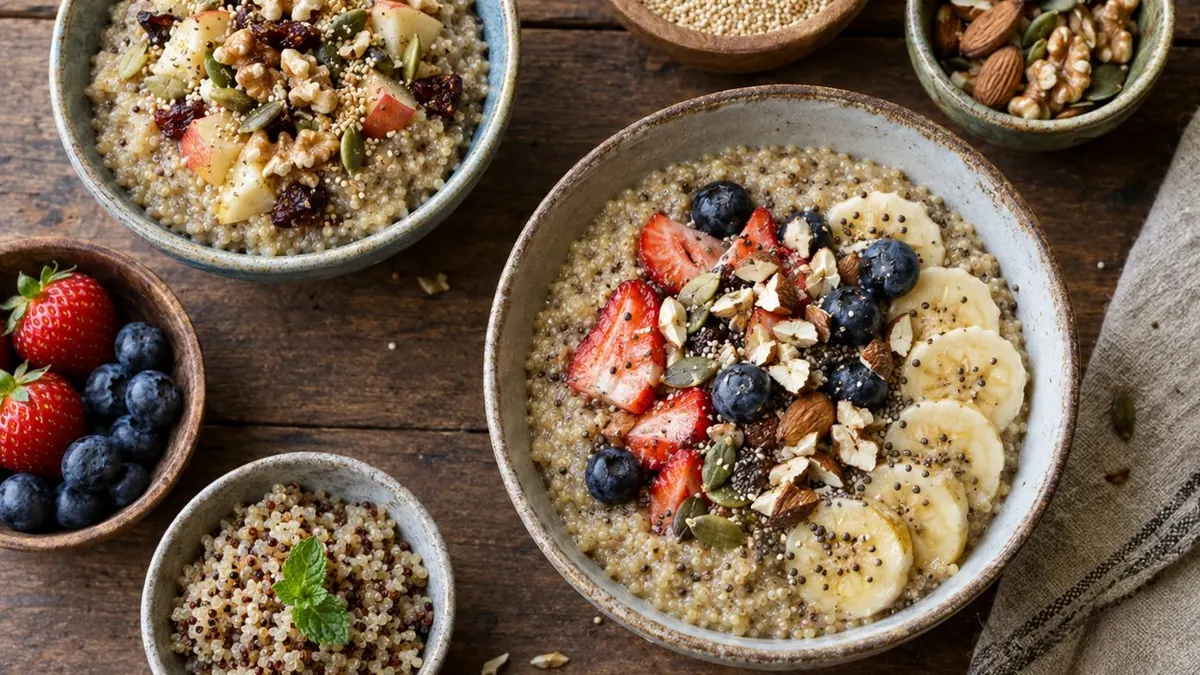
What Do You Do With Amaranth? How to Cook Ancient Grains and What to Make
Why now: “Amaranth” is a new entry on the Rising Trends cooking list in November 2026, with fast year over year growth from a small base. Rising Trends treats entries of this size as early signals.
Amaranth is a tiny seed that has been grown for thousands of years in the Americas. It is gluten free, cooks quickly and has a nutty, earthy taste. It belongs to the group of so called ancient grains, along with quinoa, millet, sorghum, spelt and farro. This guide explains how to cook amaranth and other ancient grains and gives a few easy recipes.
What is amaranth
Amaranth seeds are about the size of poppy seeds. They are commonly cooked as a porridge, popped like popcorn or ground into flour. The leaves of the plant are also eaten as greens in many cuisines. The seeds contain protein, fiber and several minerals. General information, not medical advice.
How to cook amaranth
Use 1 cup of amaranth to 2 1/2 cups of water with a pinch of salt. Bring to a boil, reduce the heat and simmer covered for 20 minutes. The result is soft and slightly sticky, like porridge. For a fluffier texture, use 1 3/4 cups of water and cook for 15 to 20 minutes until absorbed. Rinse in a fine sieve first, since the seeds are tiny.
Recipe 1: Breakfast porridge
Cook 1/2 cup of amaranth in 1 1/2 cups of milk with a cinnamon stick for 20 minutes. Sweeten with honey or maple syrup and top with sliced banana, nuts and a pinch of cardamom.
Recipe 2: Savory amaranth bowl
Cook amaranth with stock instead of water. Top with roasted vegetables, a spoonful of yogurt, chopped herbs and a fried egg. Add halal grilled chicken for more protein.
Recipe 3: Popped amaranth
Heat a dry pan until hot. Add 1 tablespoon of seeds at a time and shake. They pop in a few seconds. Use as a crunchy topping for yogurt, salads and soups.
Recipe 4: Amaranth and vegetable patties
Mix 1 cup of cooked amaranth with 1 grated zucchini, 1 egg, 1/2 cup of breadcrumbs, garlic, salt and herbs. Shape into patties and pan fry in oil for 3 minutes per side.
Other ancient grains at a glance
Quinoa: Cook 1 to 2 for 15 minutes. Rinse first. Good for salads. Millet: 1 to 2.5 for 20 minutes. Mild, good as a side. Farro: 1 to 3 for 25 minutes. Chewy and good in soups. Sorghum: Cook 1 to 3 for 50 minutes. Chewy, can be popped. Buckwheat: 1 to 2 for 15 minutes. Used in porridge and pancakes. Note that farro and spelt contain gluten.
Storing grains
Keep in an airtight container in a cool dark place. Whole grains contain oils that can go rancid, so use within six months or keep them in the fridge or freezer.
Common mistakes
Using too much water makes amaranth gluey. Not rinsing quinoa leaves a bitter coating. Cooking on too high heat burns the bottom. Overcooking makes mush.
Frequently asked questions
Is amaranth gluten free? Yes, it is naturally free of gluten, though check packaging for cross contamination.
Can I use it in baking? Amaranth flour can replace a portion of regular flour in muffins and pancakes.
Where can I buy it? Health food shops, large supermarkets and online.
Amaranth in baking
Replace up to a quarter of the flour in pancakes, muffins and flatbreads with amaranth flour. The flour is dense, so a small share gives a nutty flavor without making the bake heavy. Pop a spoonful on top of muffins before baking for a crunchy top.
A one pot amaranth and lentil dish
Fry an onion in oil, add 2 cloves of garlic, 1 teaspoon of cumin and 1 teaspoon of turmeric. Add 1/2 cup of amaranth, 1/2 cup of red lentils and 3 cups of stock. Simmer for 25 minutes until thick. Finish with lemon juice, parsley and a spoon of yogurt. It makes a quick, warming dinner for two.
Amaranth greens
The leaves are sold as greens in Asian, African and Caribbean shops. Wash well and cook like spinach. Saute with garlic and oil for 5 minutes, or add to lentil dishes and soups. They have a mild earthy taste.
Tips for a good porridge
Stir now and then to avoid sticking. Add a splash of milk at the end for creaminess. Make a big batch and refrigerate in a jar. It firms up when cold, so loosen it with milk when reheating. Sweeten with fruit, such as stewed apples or dates, rather than a lot of sugar.
The takeaway
Amaranth and other ancient grains are easy to cook and add variety to meals. Start with a simple porridge or a grain bowl.