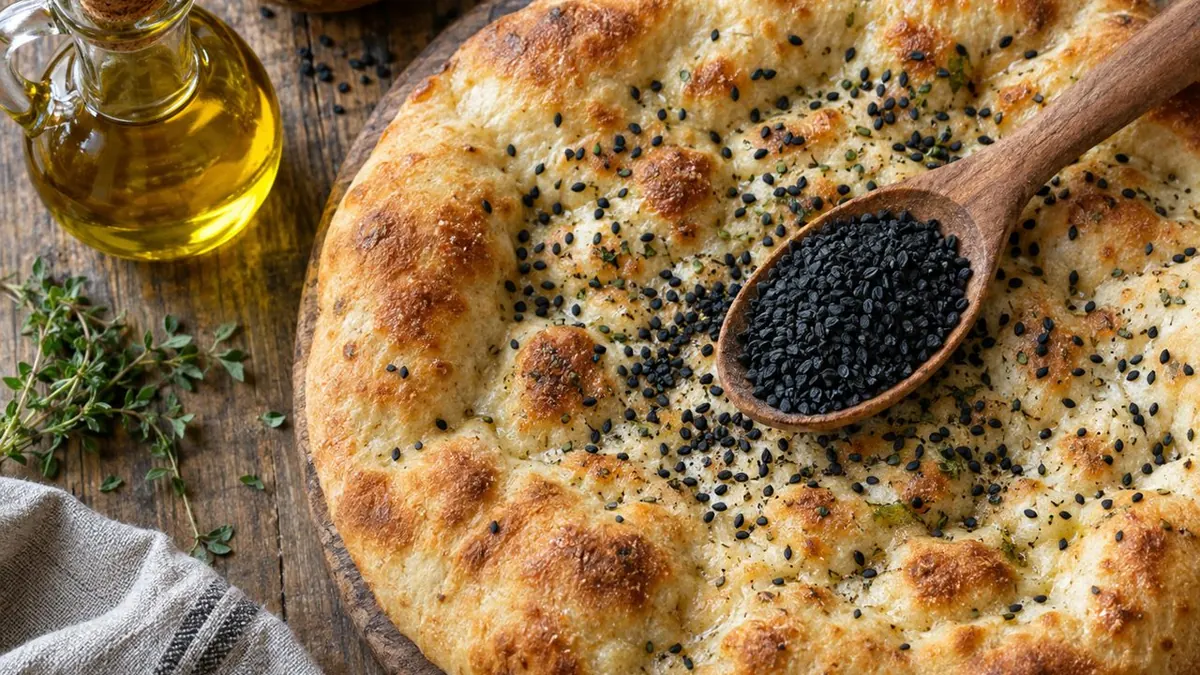
What Is Black Cumin? How to Cook With Nigella Seeds and What to Know
Why now: “Black cumin” is a rising food search of 2026 on Rising Trends, at about 40,500 searches and roughly 21% year over year growth.
Black cumin, also called nigella seeds, kalonji and black seed, are tiny black seeds from the plant Nigella sativa. They have a sharp, slightly bitter, peppery flavor with notes of oregano and onion. They are used in breads, curries, pickles and spice blends across the Middle East, North Africa and South Asia, and they hold a special place in many Muslim homes, where they are sometimes called habbat al barakah, the seed of blessing. This guide explains how to cook with them, what to avoid claiming and some simple recipes.
A name that confuses
The name black cumin is used for more than one spice. Nigella sativa is often called black cumin or black seed. Bunium persicum is also called black cumin or shahi jeera, and it is a different spice with a more delicate flavor used in Indian cooking. When you buy, check the Latin name or the label that says nigella or kalonji to be sure.
Flavor and uses
Nigella seeds taste somewhat bitter and smoky, with a hint of onion. Toasting them brings out the aroma and softens the bitterness. They are sprinkled on flatbreads such as naan and Turkish pide, and on bread rings and simit. They are used in Indian panch phoron, a five spice mix, and in Bengali cooking. They are added to pickles and lentil dishes, tossed into salads and used in the dough of savory pastries.
Cooking tips
Toast lightly. Dry toast in a pan for 30 seconds until fragrant.
Use a small amount. A teaspoon is often enough for a dish for four.
Add at the start or end. For tempering, fry the seeds in hot oil for a few seconds, then add other ingredients. As a topping, sprinkle on at the end.
Store well. Keep in an airtight jar away from light.
Recipes to try
Nigella flatbread. Make a simple dough with 2 cups flour, 1 teaspoon yeast, 1 teaspoon salt, 3/4 cup warm water and 1 tablespoon oil. Rest for 1 hour, divide into 6, roll, brush with water and press on a tablespoon of nigella seeds. Cook in a hot dry pan or oven until puffed and golden.
Yogurt and cucumber salad. Mix 1 cup plain yogurt, 1 grated cucumber, a pinch of salt and a teaspoon of toasted nigella seeds. Serve with rice or grilled meat.
Spiced lentils. Heat 2 tablespoons oil, add 1 teaspoon nigella seeds, 1 teaspoon cumin seeds and a sliced onion. Cook until golden. Add 1 cup red lentils, 3 cups water and 1/2 teaspoon turmeric and simmer for 20 minutes. Finish with lemon.
Roasted vegetables. Toss cauliflower or sweet potato with olive oil, salt and nigella seeds, then roast at 220 C (425 F) for 25 minutes.
Cheese or egg topping. Sprinkle on scrambled eggs, feta or labneh.
Black seed oil
Cold pressed black seed oil is sold as a supplement and used in some traditional remedies. It is strong and bitter, and is not a normal cooking oil. Claims about health benefits are widely repeated, but the evidence in humans is limited and mixed. If you want to try it, talk to your doctor first, especially if you are pregnant, take medications or have a medical condition. Do not use it as a replacement for medical care.
Where to buy
Look in Middle Eastern, Indian and halal grocery stores, or online. Choose seeds that are matte black and fragrant, without a stale smell. Whole seeds keep their flavor longer than ground ones.
Pairings
Nigella pairs well with cumin, coriander, fennel, mustard seeds, garlic, lemon, yogurt, eggplant, potatoes, lentils and honey. A small pinch in a honey drizzle over cheese makes a lovely contrast.
Common questions
Is black cumin the same as regular cumin? No. Regular cumin is a different seed with an earthy, warm flavor.
Is it spicy? It is peppery and a bit bitter, but not hot like chili.
Can I grind it? Yes, in a spice grinder, though whole seeds are more versatile.
Ways to use black cumin in the kitchen
Sprinkle the seeds over flatbread, naan, bagels or pastries before baking. Add them to pickles, lentil dishes, roasted vegetables and rice. Toast them lightly in a dry pan for a minute to bring out the aroma. Grind a pinch into a spice blend or stir into yogurt. The oil has a strong taste and is usually taken in small amounts, such as a teaspoon mixed with honey.
Buying and storing
Buy whole seeds from a shop with good turnover and keep them in an airtight jar away from light. Whole seeds stay fresh for a year or more, while ground seeds fade faster. If you buy the oil, look for cold pressed oil in a dark bottle. Check with a doctor before use if you are pregnant, taking medication or have a health condition. General information, not medical advice.
The takeaway
Nigella seeds are a small ingredient with a big flavor. Add a pinch to bread, vegetables or yogurt and see what it adds. This article is general food information and not medical advice.
Frequently asked questions
Can I substitute it? Poppy seeds or sesame seeds give a similar look on bread but not the same flavor. A tiny pinch of cumin and oregano comes a little closer in taste.
How long does it keep? Whole seeds keep for one to two years in a sealed jar, but flavor fades over time.
Can I use it in sweet dishes? Yes. It appears in some pastries and pairs surprisingly well with honey and dates.
Does it go in tea? Some people steep a teaspoon with ginger and honey. Use a small amount, since the flavor is strong.