What Is Koshari? Egypt's Layered National Dish and How to Make It
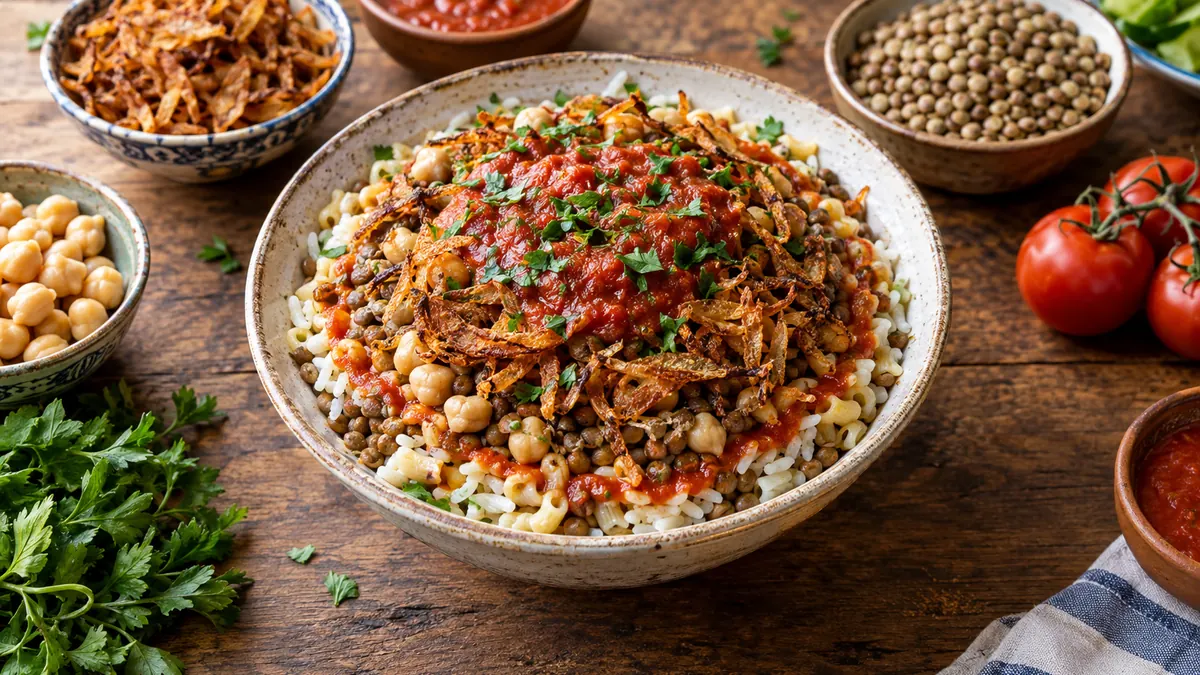
Koshari is a bowl of rice, lentils and pasta, topped with chickpeas, a spicy tomato sauce and crispy fried onions. It is sold from small shops and street stalls across Egypt, and it is one of the country’s most loved meals. It is entirely plant-based, filling, cheap and naturally halal. In December 2025, UNESCO recognized koshary as part of the world’s cultural heritage, a sign of how important the dish is.
Where does koshari come from?
Nobody knows for sure, and food writers say the dish is better understood as something layered together over time than invented in a single day. Many Egyptians believe it was inspired by kitchari, an Indian dish of rice and lentils. One popular story says Indian soldiers brought it to Egypt during the British occupation in the late nineteenth century. Another idea points to Italian influence, since koshari contains two Italian staples: pasta and tomato sauce.
Other writers connect the dish to Egypt’s long history as a crossroads of trade, with cooks combining what they had at hand. Researchers say the earliest written mentions come from travelers in the nineteenth century. Because the real origin is unknown, it is safest to say that koshari is an Egyptian dish with mixed influences, shaped by many cooks over generations.
Why people love it
Koshari is cheap, nourishing and satisfying. It became popular among workers and families because a plate costs little and keeps you full all day. In Cairo, koshari shops serve it in stainless steel bowls, with sauce, extra chili and vinegar on the side. Each shop has its own style of sauce and its own fried onions, and people have strong opinions about which is best.
Ingredients (serves 6)
For the rice and lentils: - 1 cup (200 g) brown or green lentils - 1 cup (200 g) short-grain rice - 2 tbsp oil - 1 tsp salt
For the pasta: - 1 cup (150 g) small macaroni or elbow pasta - 1/2 cup vermicelli (optional)
For the tomato sauce: - 2 tbsp oil - 4 cloves garlic, minced - 1 can (800 g) crushed tomatoes - 1 tbsp white vinegar - 1 tsp cumin - 1/2 tsp chili flakes - Salt and pepper
For the topping: - 1 can (400 g) chickpeas, drained - 3 large onions, thinly sliced - 1/2 cup oil for frying - 2 tbsp flour or cornstarch
For the garlic vinegar (daqqa): - 3 cloves garlic, crushed - 1/4 cup white vinegar - 1/4 cup water - 1 tsp cumin, pinch of salt
Method
- Cook the lentils in water for 20 minutes until just tender. Drain and keep the water.
- Sauté the rice in oil for 2 minutes, add the lentils and 2 cups of the lentil water, salt, cover and cook on low for 15 to 20 minutes.
- Boil the macaroni (and vermicelli) in salted water until just cooked. Drain.
- Make the sauce: soften the garlic in oil, add tomatoes, vinegar, cumin and chili. Simmer for 15 minutes until thick.
- Make the onions: toss the sliced onions with flour. Fry in hot oil in batches until deep golden brown and crisp. Drain on paper towel.
- Mix the vinegar sauce ingredients in a small bowl.
- Assemble: layer rice and lentils, then pasta, then chickpeas. Spoon over sauce. Top with crispy onions. Serve with the vinegar sauce and hot sauce at the side.
Eating koshari the Egyptian way
In an Egyptian koshari shop, the bowl comes with two sauces on the side: a red, spicy tomato sauce and a sharp garlic and vinegar sauce called daqqa. Most people add both, then stir everything together before eating so that every spoonful has rice, lentils, pasta, chickpeas, sauce and crisp onion. A squeeze of hot sauce is optional. Many shops also offer a small cup of the lentil cooking water to loosen the dish if it feels too dry. At home, set out the sauces in small bowls and let everyone season their own plate.
Making it for a crowd
Koshari is an excellent dish for a crowd because every part can be cooked ahead. Make the lentils and rice in the morning, the sauce the day before, and fry the onions an hour before serving. Keep the components warm in separate pots, and let guests build their own bowls from a buffet table. The mix of textures makes it a hit with both adults and children, and the cost per person is very low.
Tips
Fry the onions slowly. Move them often so they brown evenly, and take them out when golden, since they continue to darken. Cook the pasta slightly firm, as it keeps cooking in the hot sauce. Use a smooth, thick sauce so it coats the layers. Keep each component separate until assembly, to preserve the textures.
Variations
Use rice only for a simpler version. Add a layer of fried vermicelli for a nuttier flavor. Use a spicy chili sauce called shatta for heat. Some cooks add a spoon of cumin to the lentils.
Halal notes
Koshari contains no meat or alcohol, which makes it a good halal meal. Check that the vinegar you use is not made from wine. White distilled vinegar is a common choice.
Storage
Keep components separate in the fridge for up to three days. Reheat and assemble fresh. The onions stay crisp at room temperature in an airtight jar for a day.
Frequently asked questions
Is koshari healthy? It contains plant protein, fiber and carbohydrates, but the fried onions and oil add fat. Bake the onions for a lighter version.
Why is it called koshari or koshary? Spellings vary because it is transliterated from Arabic. Both are common.
Can I make it ahead? Yes. Make the sauce and the onions in advance, and assemble when you are ready to serve.
Is it traditionally spicy? There is chili in the sauce, but the heat is usually adjusted at the table with hot sauce.
Sources
The discussion of koshari’s mixed origins and UNESCO recognition comes from Serious Eats (https://www.seriouseats.com/koshari-egyptian-lentils-rice-and-pasta-recipe-8653829), Smithsonian Magazine (https://www.smithsonianmag.com/travel/the-layered-history-of-koshary-egypts-most-beloved-street-food-180988262/) and Reuters (https://www.reuters.com/world/africa/koshary-spicy-egyptian-staple-wins-unesco-recognition-2025-12-10/). Because the origin is debated, it is presented as such.