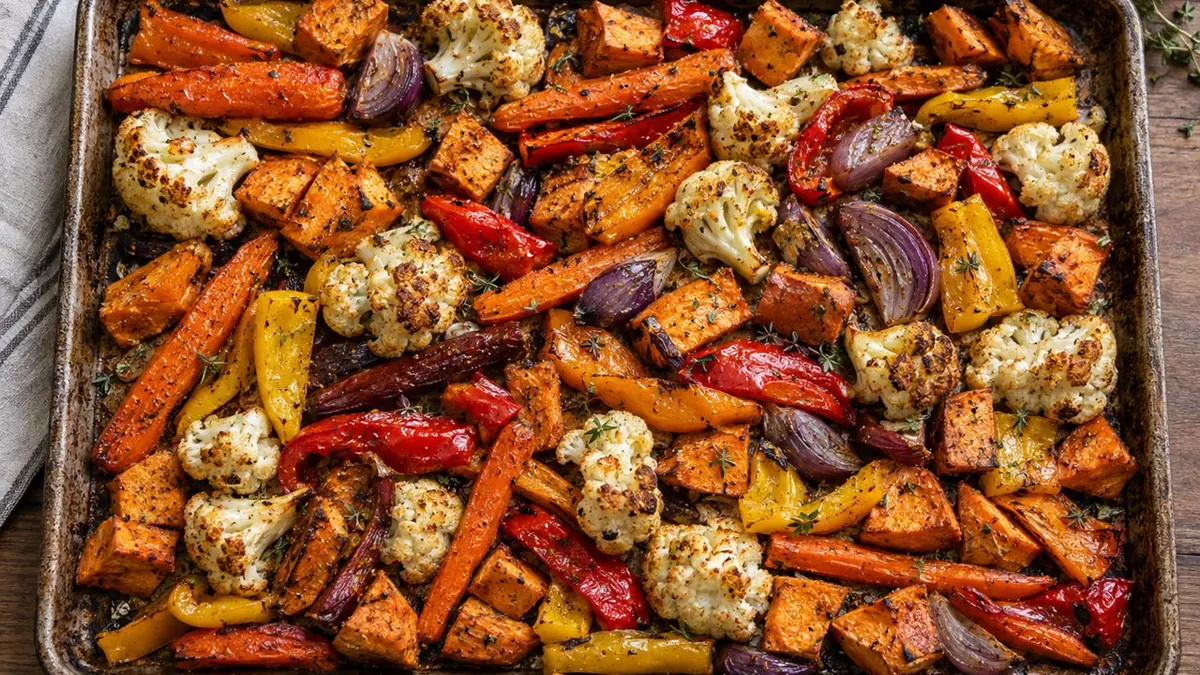
How Long Do Roasted Vegetables Take? A Temperature and Timing Chart
Why now: Rising Trends shows vegetable forward and easy oven recipes among the growing cooking searches in November 2026, and roasting is the simplest way to cook almost any vegetable.
Roasting concentrates the natural sugars in vegetables and gives them caramelized edges. It is also the easiest method: chop, oil, season and wait. This guide gives the rules, a timing chart for common vegetables, flavor mixes and ideas for turning a tray of roast vegetables into a meal.
The rules
Use high heat. 200 to 220 C (400 to 425 F). Dry the vegetables. Wet vegetables steam. Use enough oil. About 1 tablespoon per 500 g. Do not crowd. Use two trays if needed. Cut evenly. Pieces the same size cook together. Season with salt. Add it before roasting. Turn once. Halfway through, for even browning.
Timing chart (at 210 C / 410 F)
- Potatoes, cut in chunks: 35 to 40 minutes
- Carrots and parsnips: 25 to 30 minutes
- Sweet potatoes: 25 to 30 minutes
- Butternut squash: 25 to 30 minutes
- Beetroot, small chunks: 35 to 40 minutes
- Cauliflower and broccoli florets: 20 to 25 minutes
- Brussels sprouts, halved: 20 to 25 minutes
- Onions and red onion wedges: 25 to 30 minutes
- Peppers: 20 to 25 minutes
- Zucchini and eggplant: 20 to 25 minutes
- Asparagus and green beans: 10 to 15 minutes
- Tomatoes: 15 to 20 minutes
Flavor mixes
Cumin and paprika: With carrots, sweet potatoes and cauliflower. Lemon and garlic: With broccoli and green beans. Za’atar: With eggplant, tomatoes and peppers. Honey and chili: With carrots and squash. Rosemary and thyme: With potatoes and onions. Curry powder: With cauliflower and chickpeas.
Finishing touches
Squeeze lemon juice over hot vegetables. Add fresh herbs, such as parsley, mint or coriander. Spoon over yogurt, tahini sauce or a vinaigrette. Sprinkle toasted nuts and seeds. Add crumbled cheese, checked for suitable rennet, or pomegranate seeds.
Turn them into a meal
Toss roast vegetables with lentils or chickpeas and a dressing for a warm salad. Pile on rice or couscous with yogurt sauce. Serve with a roast chicken or grilled fish. Blend roast vegetables with stock for a rich soup. Stuff into pita with hummus. Fold into an omelet.
Seasonal ideas
Autumn and winter: Squash, parsnips, beetroot, Brussels sprouts and potatoes. Spring: Asparagus, new potatoes and carrots. Summer: Zucchini, peppers, tomatoes and eggplant.
Storage
Cool and refrigerate for up to four days in a sealed container. Reheat in the oven or a hot pan to bring back some crispness. Microwave works for quick reheating, but they will soften.
Sheet pan tips
Preheat the pan so that vegetables sizzle when they touch. Use parchment for easier cleaning, but for the best browning roast directly on a hot metal pan with oil. Rotate the pan if your oven has hot spots.
Common mistakes
Overcrowding leads to soggy vegetables. Cutting at different sizes causes uneven cooking. Using too little oil leaves them dry. Opening the oven too often loses heat.
Frequently asked questions
Can I roast frozen vegetables? Yes, straight from frozen on a hot tray, though they will be softer.
Do I need to peel? Not usually. Wash and scrub.
What oil is best? Olive oil or any oil that tolerates high heat.
Roasting whole vegetables
Whole cauliflower, rubbed with oil and spices and roasted at 200 C (400 F) for 50 to 60 minutes, makes an impressive centerpiece. Roast whole beetroot wrapped in foil for an hour. Roast a whole head of garlic, cut the top off and drizzle with oil, for 40 minutes, then squeeze out the soft cloves into dressings and mashed potatoes. Roast whole eggplants until collapsed, then scoop out the flesh for dips.
Roasting fruit with vegetables
Add halved grapes, apple wedges or orange slices to a tray of squash and onions for sweet and sour contrast. Dried apricots and dates add chew near the end of cooking. Pomegranate seeds sprinkled on top add freshness.
Make ahead
Roast a big tray on Sunday and use the vegetables in grain bowls, wraps and omelets through the week. Reheat in a hot oven for 8 minutes to recover texture. Keep dressings separate until serving.
The takeaway
Hot oven, dry vegetables, enough oil and room on the tray. Follow the chart and every season has something good to roast.