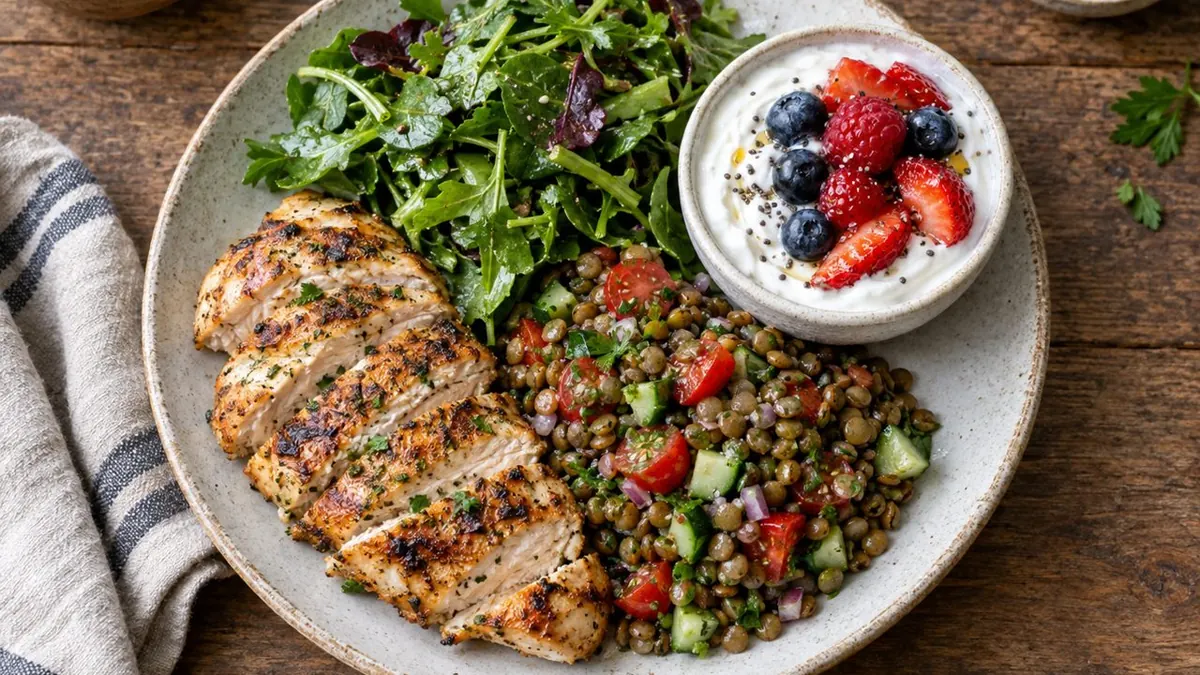
Small Appetite? High Protein, High Fiber Meals That Fit Your Plate
Why now: “GLP-1 meals” is one of the fastest rising food searches of 2026 on Rising Trends, at about 4,400 searches and roughly 100% year over year growth.
More people are looking for meals that are small, filling and nutrient dense, including those who use appetite reducing medicines such as GLP-1 drugs, those who simply eat smaller portions and those who want to build protein into every meal. This article is general food information and not medical advice. Anyone taking a prescription medicine should follow the guidance of their doctor or a registered dietitian. The ideas here are good everyday habits for many people: focus on protein, fiber, fluids and easy to digest foods.
Why protein and fiber matter
When appetite is smaller, each bite needs to count. Protein helps maintain muscle and keeps you full. Fiber from vegetables, beans, fruit and whole grains supports digestion. Fluids matter too, since some people forget to drink when they are not hungry. Healthy fats add flavor and energy in small portions.
Principles
Small, frequent meals. Five or six small meals may be easier than three large ones.
Protein first. Eat the protein part of the meal before the starch.
Choose gentle textures. Soft, moist foods are easier to eat than dry or very greasy ones.
Go easy on fried and very fatty foods. They can be harder to digest and may cause discomfort.
Sip fluids between meals. Water, broth and herbal tea help.
Eat slowly. Give your body time to register fullness.
Halal protein options
Halal chicken breast and thigh, lean beef, lamb mince, fish, eggs, Greek yogurt, labneh, cottage cheese, lentils, chickpeas, tofu and nuts. For Ramadan, use these at suhoor and iftar to avoid long gaps without protein.
Easy meal ideas
Breakfast. Scrambled eggs with spinach and a slice of whole wheat toast. Greek yogurt with berries and chia. Overnight oats with protein rich milk.
Lunch. Chicken and chickpea salad with lemon and olive oil. Lentil soup with a spoon of yogurt. Tuna and white bean salad.
Dinner. Baked fish with roasted vegetables. Slow cooked chicken with vegetables and rice. Beef and vegetable stir fry with a small portion of rice.
Snacks. Boiled eggs, hummus with vegetables, a small handful of nuts, cottage cheese with fruit, or a protein smoothie.
A recipe: protein smoothie bowl
Blend 1 cup Greek yogurt, 1/2 cup frozen berries, 1/2 banana and a splash of milk. Pour into a bowl and top with a tablespoon of seeds and a few chopped nuts. It gives around 20 g of protein, depending on the yogurt.
A recipe: lemon chicken and vegetable soup
Simmer 300 g of halal chicken breast in 1 liter of stock with a chopped carrot, celery and onion for 20 minutes. Shred the chicken, return it to the pot and add the juice of a lemon, a handful of spinach and a pinch of salt and pepper. Light, warm and easy to eat.
Foods that may be harder to manage
Some people find very greasy fried foods, heavy cream sauces, large portions of raw vegetables, fizzy drinks and very sweet foods uncomfortable. Pay attention to what works for you.
Shopping list
Eggs, Greek yogurt, cottage cheese, chicken breast, fish fillets, lentils, canned beans, oats, frozen vegetables, berries, bananas, nuts, seeds, stock cubes without unwanted additives, olive oil, lemons and herbs.
Frequently asked questions
Do I need special foods? No. Everyday foods that are rich in protein and fiber work well.
Can I follow this in Ramadan? Yes. Break the fast gently with dates and water, have a small bowl of soup, then a protein rich meal. At suhoor, eat protein and slow release carbohydrates and drink plenty of water.
How much protein do I need? It depends on your age, size and health. Ask a dietitian for personal advice.
A sample day of small, protein rich meals
Breakfast: Greek yogurt with berries and a spoon of chia seeds.
Lunch: Grilled halal chicken with a lentil salad and olive oil.
Snack: A boiled egg and a few cucumber slices.
Dinner: Baked fish with steamed vegetables and a small portion of rice.
Shopping list
Lean halal chicken, fish, eggs, Greek yogurt, lentils, chickpeas, tofu, leafy greens, berries, oats, nuts and olive oil. Choose foods that are filling and nutritious in small portions. Avoid sugary drinks and heavily fried foods.
Important note
Anyone using a prescription weight management medication should follow the advice of their doctor and dietitian, as needs differ between people. This article is general cooking information and not medical advice.
The takeaway
Meals that are small, protein rich and easy to digest suit many appetites. Keep it simple and speak with a health professional for personal needs. This article is general food information and not medical advice.