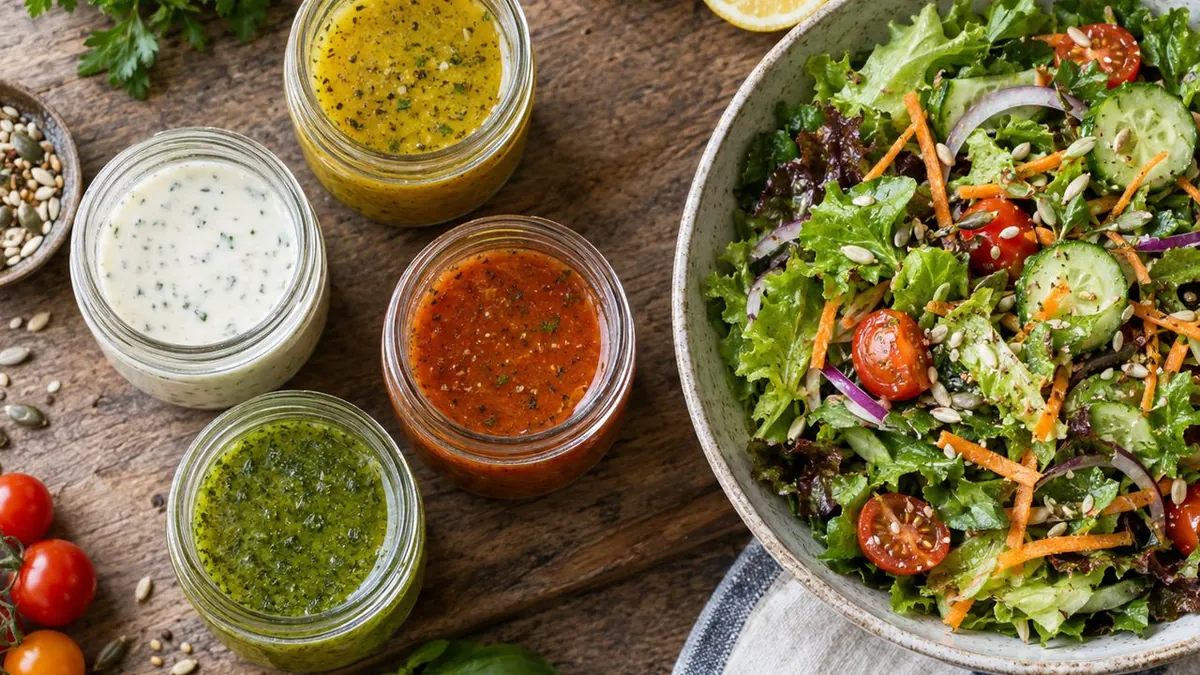
Five Salad Dressings That Make You Want to Eat Salad
Why now: Rising Trends shows interest in fresh, healthy and simple flavors among the growing cooking searches of November 2026, and homemade dressings are one of the quickest upgrades.
A good dressing makes a salad into a meal. Shop bought dressings can include added sugar, thickeners and sometimes unsuitable flavorings or alcohol based ingredients. Homemade versions take two minutes, use ingredients you already have and keep in the fridge. This guide gives a basic formula and five recipes.
The basic formula
Use three parts oil to one part acid, plus salt and something to bind. Oil can be olive, sunflower or avocado. Acid can be lemon juice, lime juice or vinegar such as apple cider or white wine free vinegar. A spoon of mustard, tahini or yogurt helps keep the dressing creamy. Shake in a jar until combined. Taste on a leaf, not on a spoon, as the flavor changes on food.
Dressing 1: Lemon olive oil
Whisk 1/3 cup of olive oil, 3 tablespoons of lemon juice, 1 teaspoon of Dijon mustard, 1 small grated garlic clove and salt. Use on green salads, grain bowls and roasted vegetables.
Dressing 2: Tahini lemon
Mix 1/4 cup tahini, 3 tablespoons lemon juice, 1 clove garlic, 1/2 teaspoon salt and 4 to 6 tablespoons cold water until pourable. Use on falafel, roasted vegetables and bowls.
Dressing 3: Yogurt herb
Mix 1/2 cup yogurt, 2 tablespoons olive oil, 1 tablespoon lemon juice, a clove of garlic, a handful of chopped dill and mint and salt. Use on cucumber salad, chicken wraps and potatoes.
Dressing 4: Honey mustard
Whisk 3 tablespoons of Dijon mustard, 2 tablespoons of honey, 3 tablespoons of apple cider vinegar and 1/3 cup of oil. Use on chicken salad, coleslaw and sandwiches. Check the mustard for any wine content.
Dressing 5: Sumac pomegranate
Whisk 1/4 cup of olive oil, 2 tablespoons of pomegranate molasses, 1 tablespoon of lemon juice, 1 teaspoon of sumac and salt. This is the classic dressing for fattoush style salads and works on grilled vegetables.
How to dress a salad
Add dressing a little at a time and toss. Dress just before serving to keep leaves crisp. Leave sturdy salads, such as cabbage and kale, to sit for 10 minutes to soften. Use about 1 tablespoon of dressing per large handful of greens.
Storage
Keep in a clean jar in the fridge. Oil and vinegar dressings last about two weeks. Dressings with fresh garlic, herbs or yogurt last about five days. Oil may harden in the fridge, so let it warm at room temperature and shake before use.
Using dressings beyond salad
Brush on chicken as a marinade. Drizzle on roasted vegetables. Spoon over rice bowls. Use as a dip for flatbread. Mix with canned tuna or chickpeas for a quick lunch.
Common mistakes
Too much acid makes it sharp, so balance with a little honey. Not enough salt leaves it flat. Using old oil adds a stale flavor. Dressing too early wilts the leaves.
Frequently asked questions
Can I use lime instead of lemon? Yes.
What vinegar is halal? Plain vinegar types are commonly accepted, but follow your own guidance. Use lemon juice as an alternative.
Can I make it thicker? Add a spoon of yogurt, mustard or tahini.
Why does it separate? Oil and acid naturally separate, and a binder helps. Shake before use.
More dressing ideas
Caesar style without anchovies or raw egg: Blend 1/2 cup of yogurt, 2 tablespoons of lemon juice, 2 tablespoons of grated hard cheese, 1 clove garlic, 1 teaspoon Dijon mustard and 2 tablespoons olive oil.
Ranch style: Mix 1/2 cup yogurt, 1/4 cup mayonnaise, 2 tablespoons milk, dried dill, parsley, garlic powder, onion powder, salt and a squeeze of lemon.
Orange sesame: Whisk orange juice, olive oil, a little honey, toasted sesame seeds and a pinch of chili. Great on shredded cabbage and carrot.
Salads that suit each dressing
Lemon olive oil goes with arugula, tomato and cucumber. Tahini lemon pairs with roasted beets, chickpeas and grated carrot. Yogurt herb pairs with potato salad and grilled chicken. Honey mustard works on a crisp cabbage slaw. Sumac pomegranate suits fattoush and grilled halloumi style cheese.
A balanced bowl formula
Pick a base (greens or grains), a protein (chicken, egg, chickpeas, fish), two vegetables, a crunchy topping (nuts, seeds or toasted pita) and a dressing. Use the dressing to tie it all together.
The takeaway
A jar of homemade dressing turns raw vegetables and plain grains into something you want to eat. Learn one ratio and you can make a new dressing every week.